
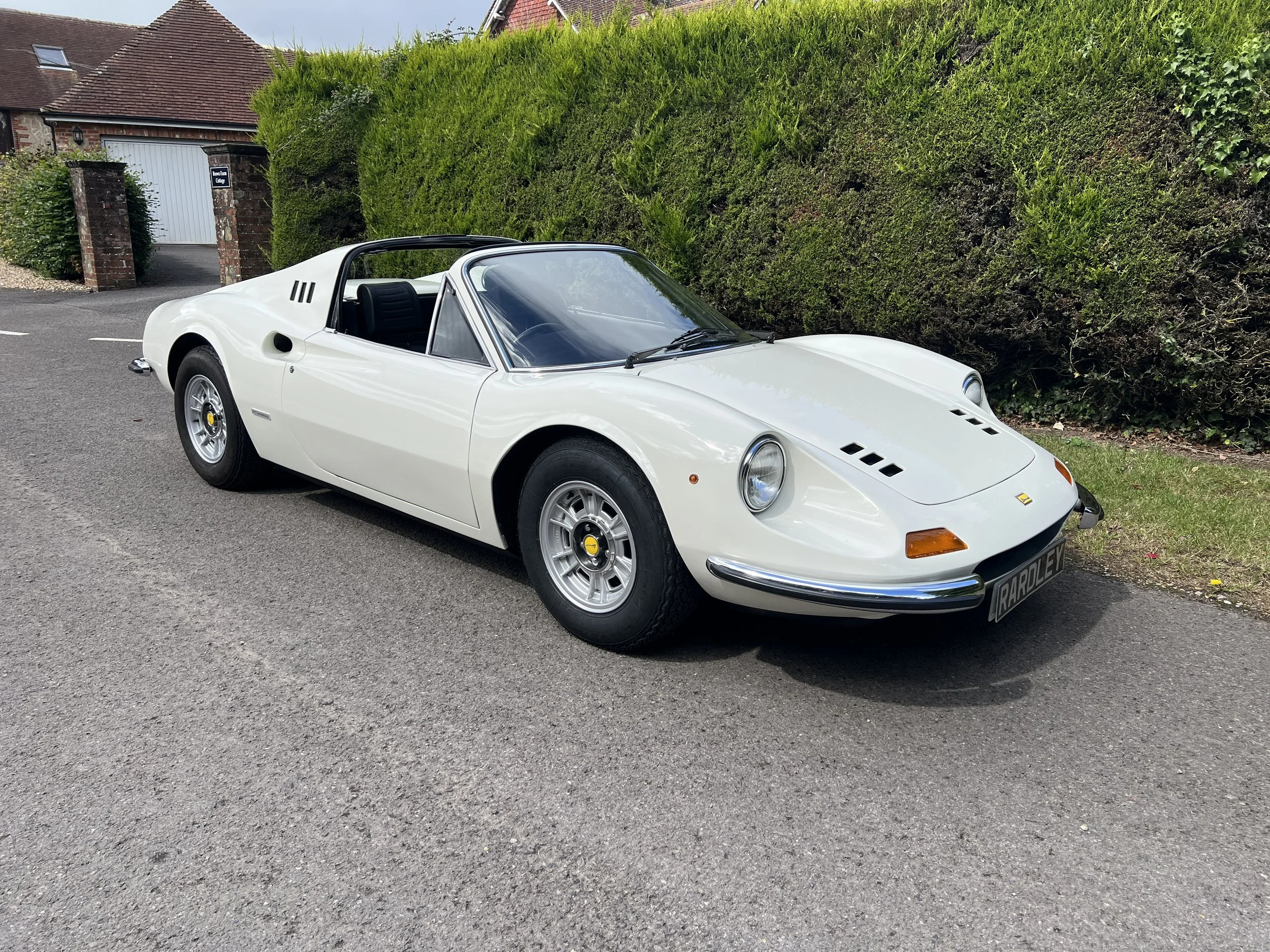
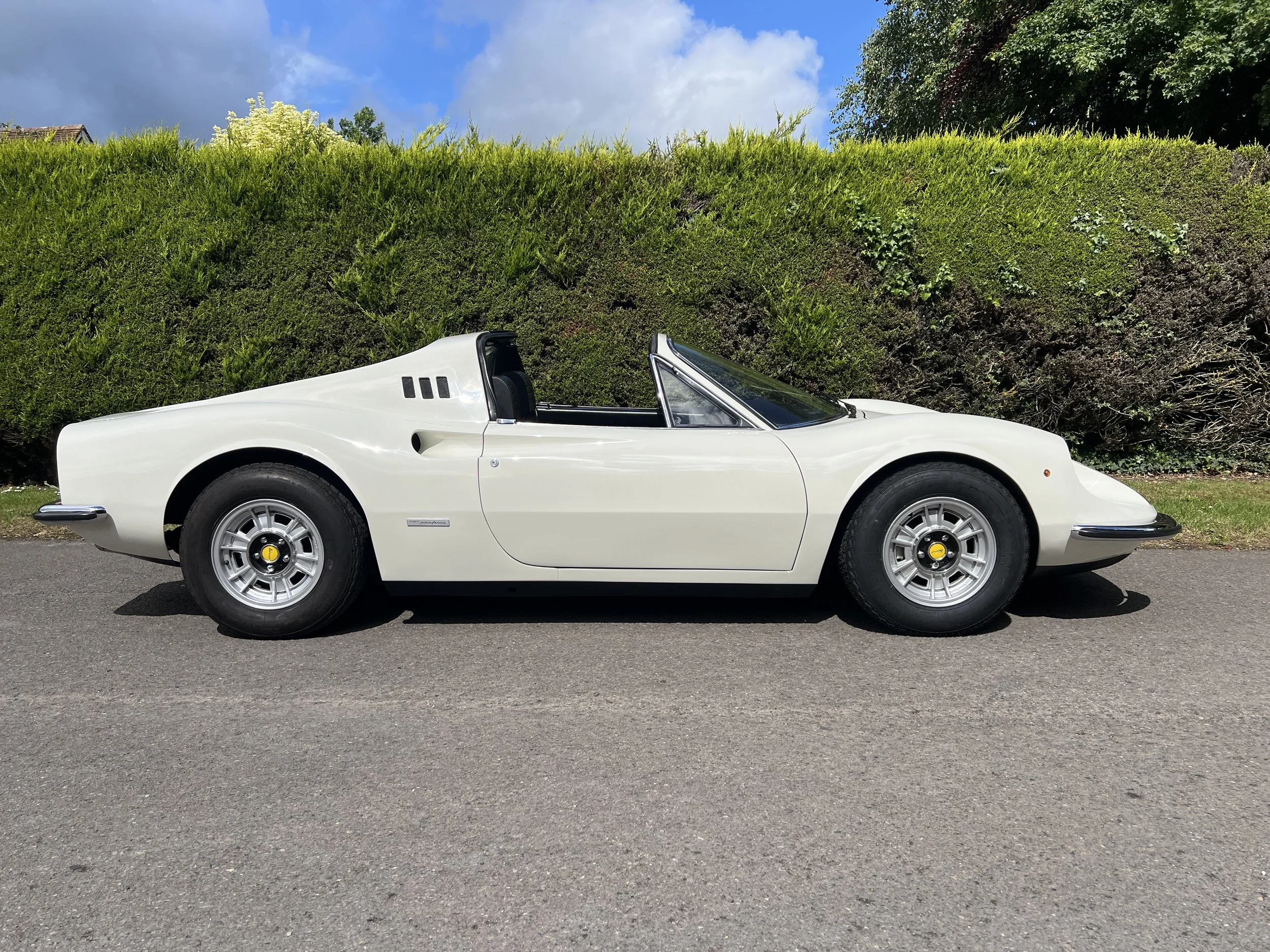
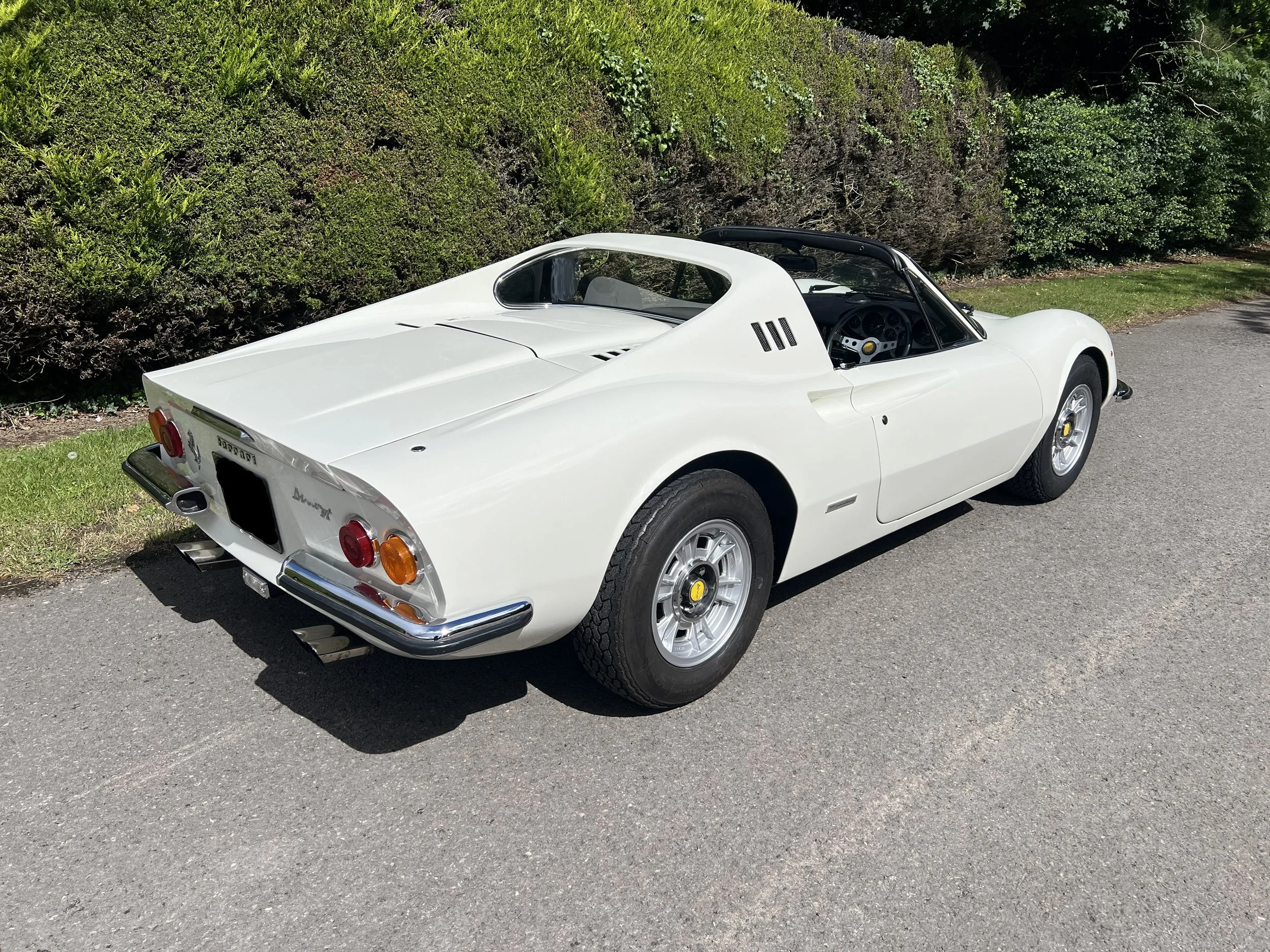
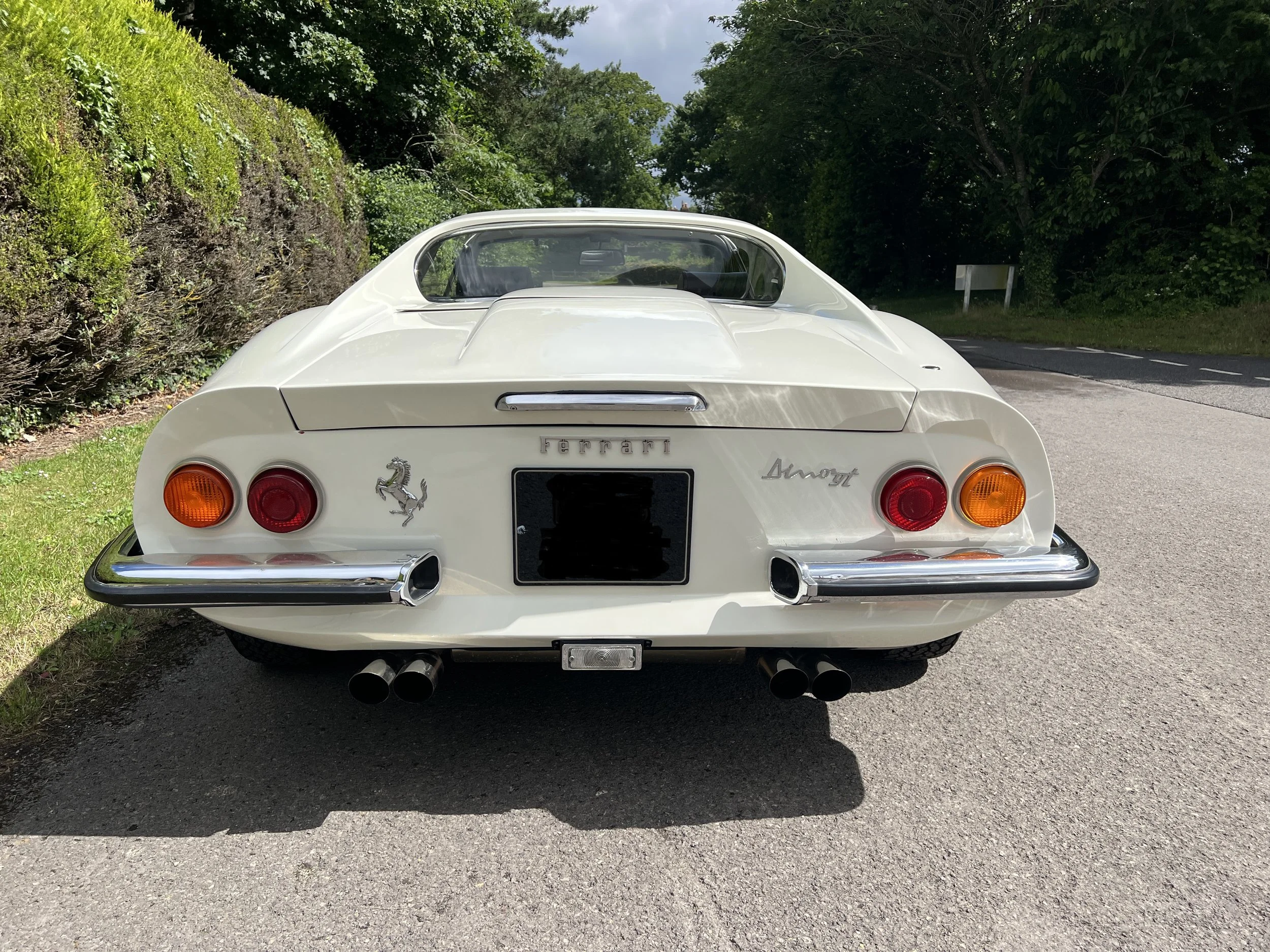
Dino Ferrari 246 GTS-One of four
YEAR: 1973
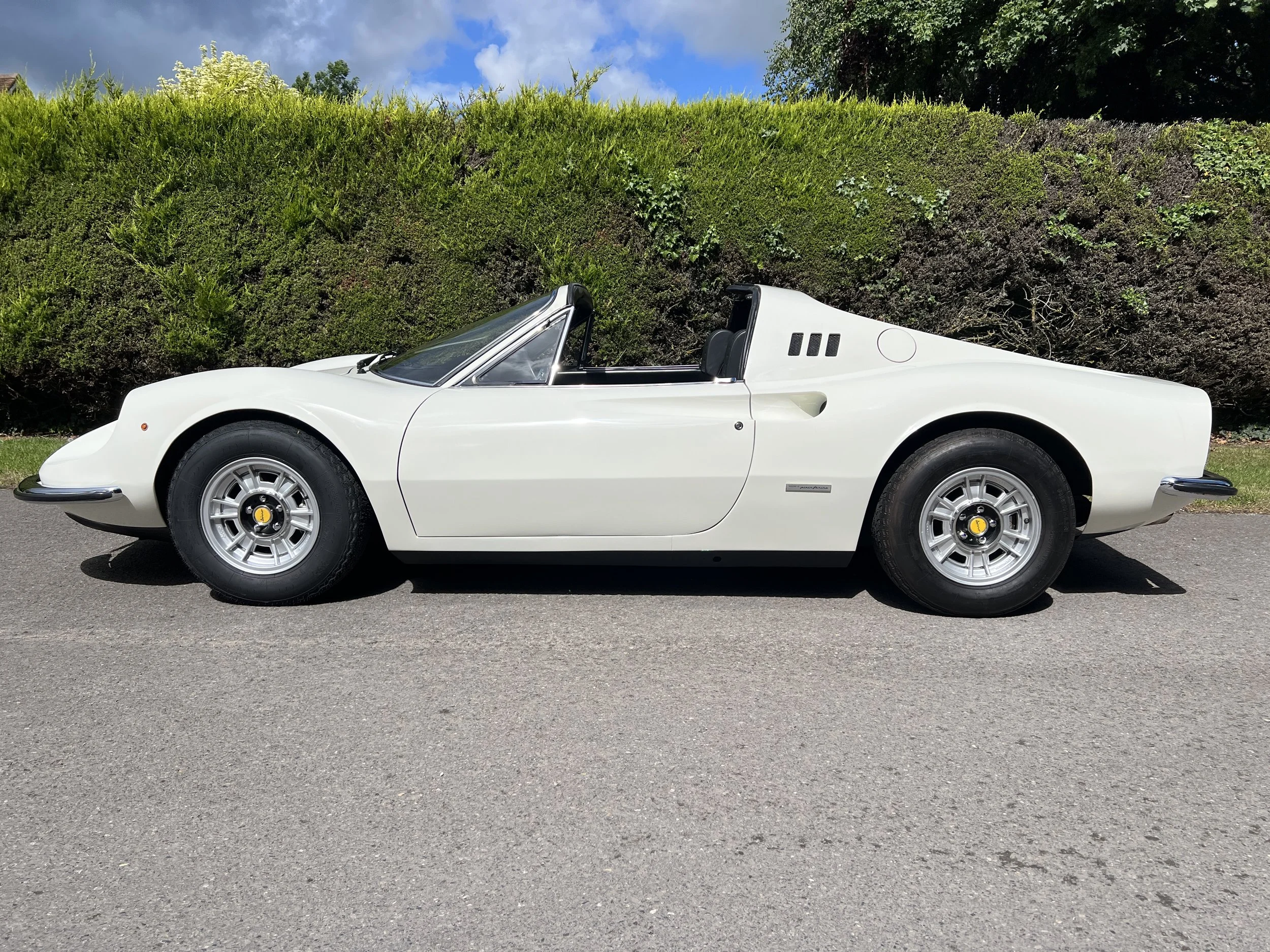
EXTERIOR COLOUR: White
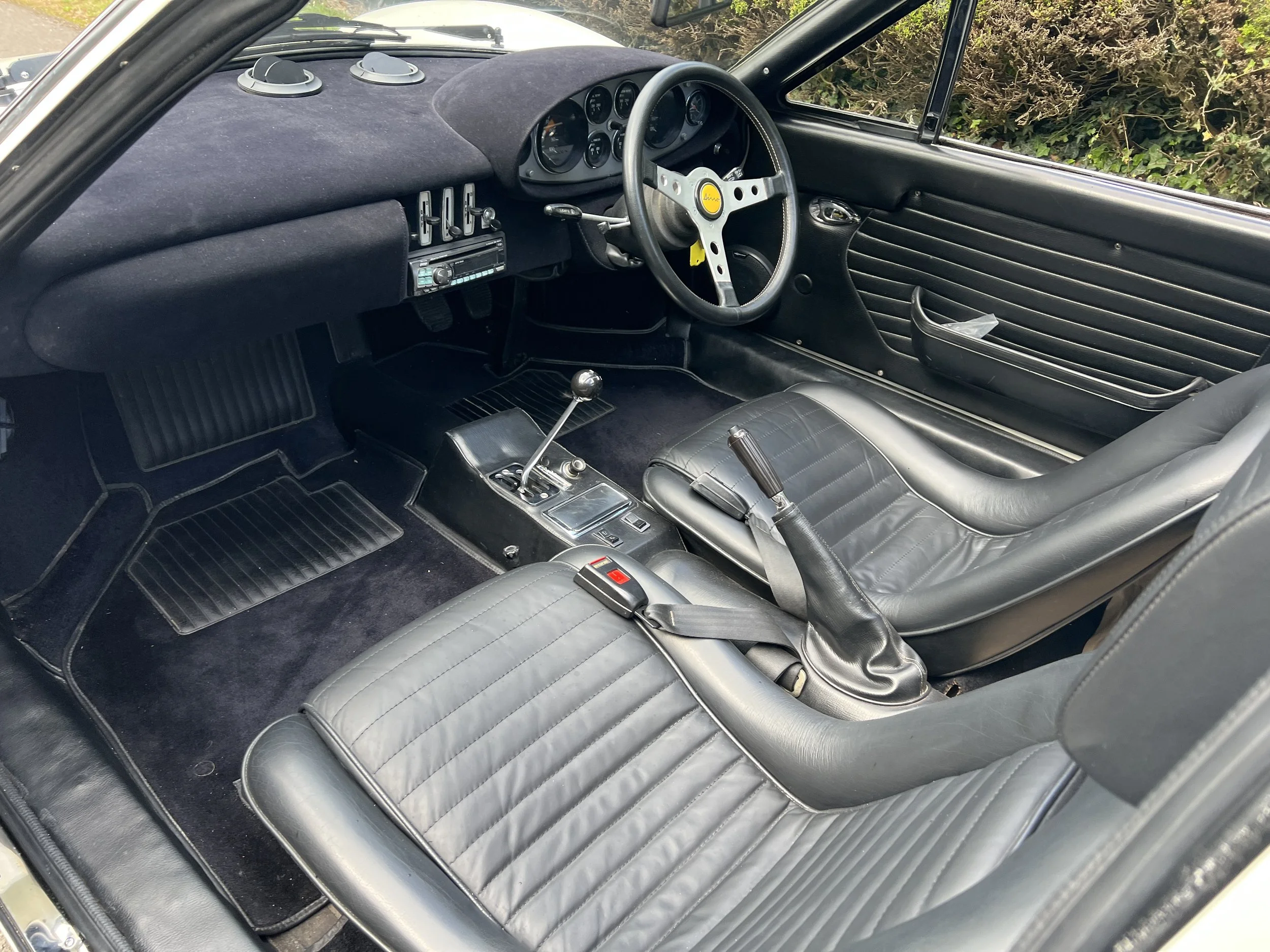
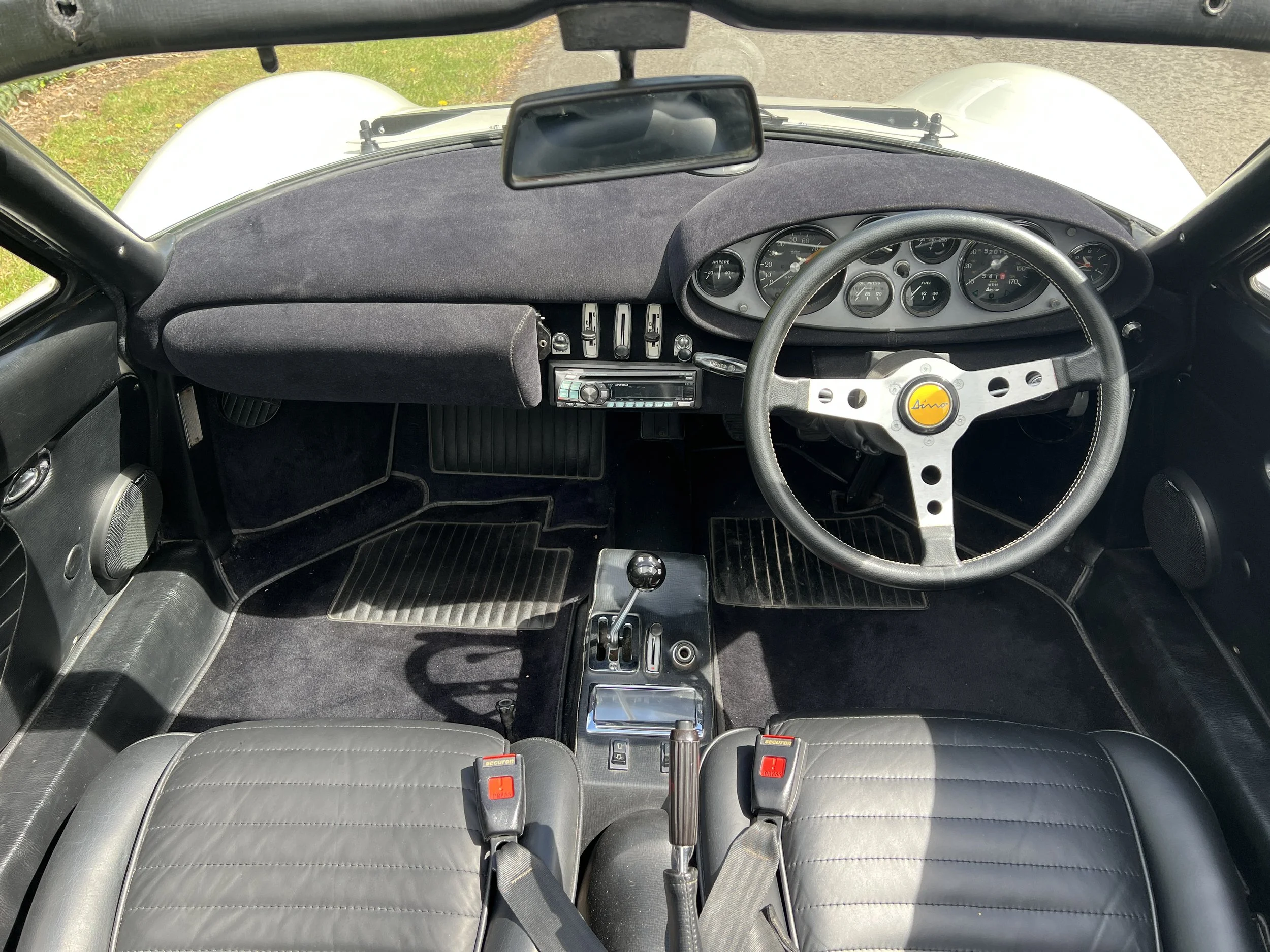
INTERIOR COLOUR: Black hide
TRANSMISSION: Five speed manual
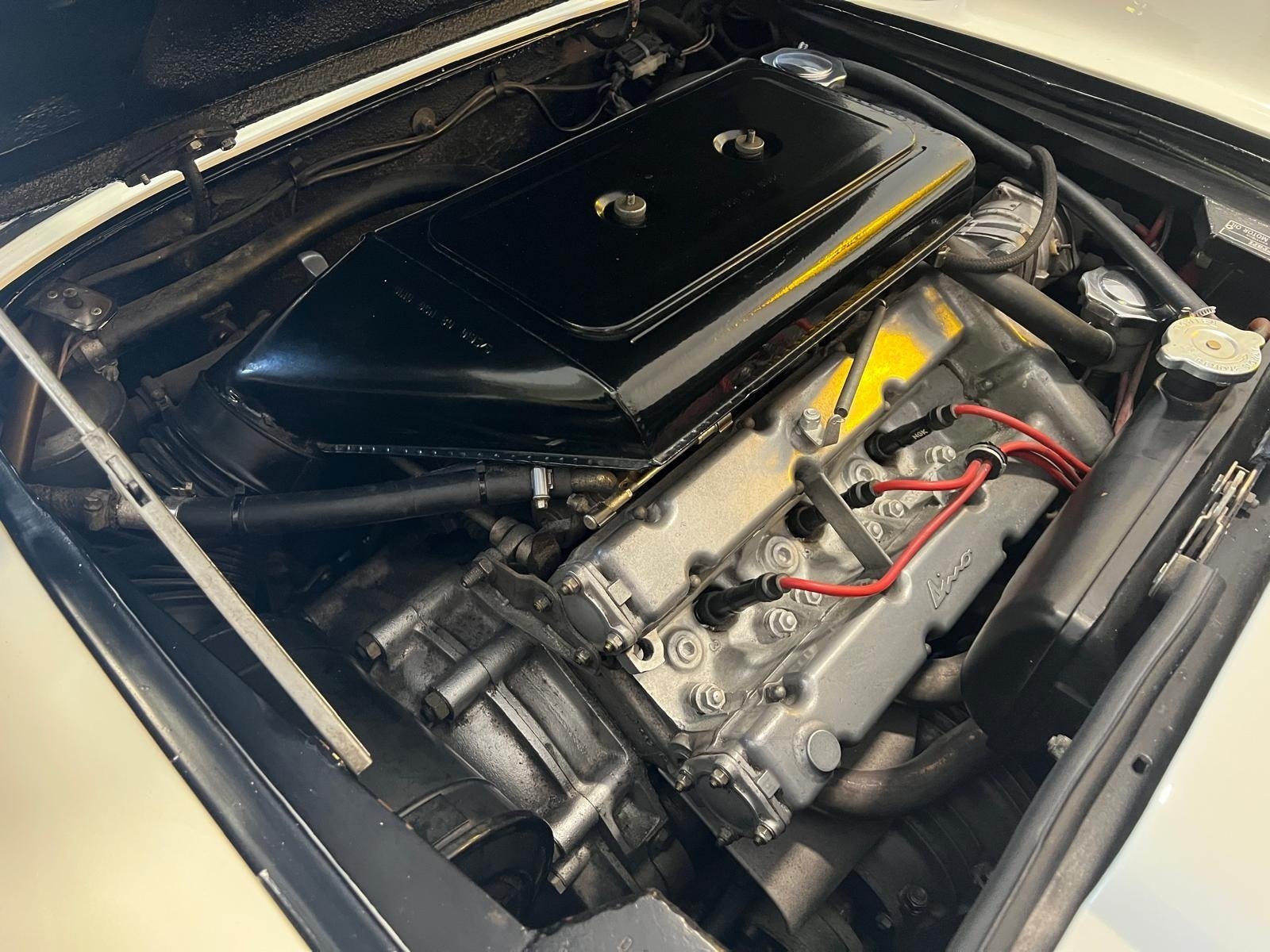
ENGINE: V-6. 2.4 litre. Four overhead camshafts
HORSEPOWER:195 BHP@7,600 rpm
PLEASE CALL FOR PRICE
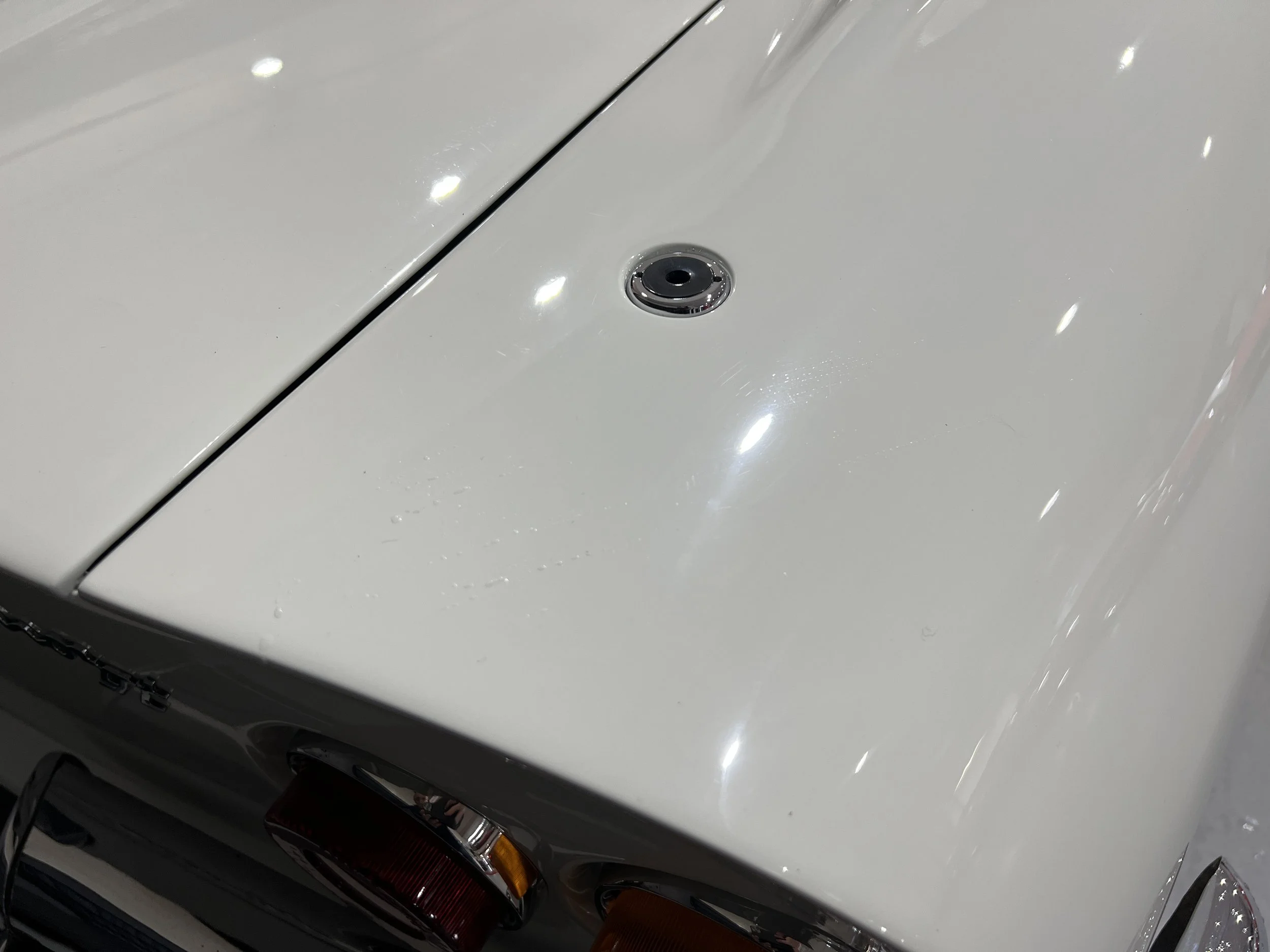
S.G.M. (Garages) Ltd, this Dino 246 GTS was specified in rare Bianco Polo Park (20-W-152) with Nero 161 interior and black carpets. It is believed to be one of only four UK-imported examples finished in this colour and one of just 247 white Dino 246s produced.
The factory confirmed the order on 22 May 1973, noting the fitment of electric windows as standard for the UK market. Completed in August 1973, the car was delivered to the UK and supplied to S.G.M. (Garages) Ltd of Newcastle upon Tyne before being first registered on 16 October 1973.
The car passed through a small number of long-term custodians, including an enthusiast who owned it for nearly two decades. During this period the car covered relatively modest mileage and remained largely original.
In the late 1990s, the car was acquired by respected Ferrari specialist Italia Autosport, who commenced a restoration. The body was stripped and refinished in its original Bianco Polo Park, while the suspension, brakes and associated components were refurbished. Owing to their excellent condition, the original interior trim and dashboard were retained. Following restoration, the car appeared at the Sotheby's Hendon auction in December 1998, displaying approximately 38,000 miles.
A subsequent owner acquired the car from renowned Ferrari specialists Foskers in 2002, retaining it for 14 years before part-exchanging it for a Mille Miglia-eligible OSCA. During this period the car was noted as being finished in red.
In 2026, the Dino was returned to its original Bianco Polo Park by T&T Premier Coachworks. At the same time, a comprehensive service was carried out, including the installation of a new clutch and four period-correct Michelin XWX tyres.
Today, this matching-numbers example has had just four registered keepers from new and is accompanied by an extensive history file. Included are copies of the original factory ordering correspondence, a report by Dino authority Matthias Bartz, author of The Dino Compendium, and a verification letter from the Maranello Archives confirming its provenance and originality.
History: With the sales of the Dino 246 GT stable, Ferrari looked to increase its popularity still further by introducing an open version. The 246 GTS made its debut at the 1972 Geneva Motor Show and reactions were immediately very positive. The styling retained the individual, attractive lines of the 264 GT, with the added advantage of a practical targa top for open-air driving.
At about the time that the Dino 206 GT gave way to its successor the 246 GT during 1969, Enzo Ferrari was reaching an agreement with Gianni Agnelli of Fiat to take over the production car side of the Ferrari business. At this time Enzo Ferrari was already over 70 years of age, and apart from securing the long-term future of the production car business, it freed him from the day to day responsibilities of it, and gave him more time to devote to his first love, the racing department.
The Story
The Dino 246 GT made its official debut at the Turin Show in November 1969, although the production run had already commenced. A total of 81 examples were completed by the end of the year.
Visually the 246 GT was almost identical to the 206 GT that it succeeded, apart from the fuel filler cap being under a flush fitting flap on the left sail panel.
In reality there were more differences than initially met the eye. Apart from the increase in engine capacity from 2 litres to 2.4 litres, the engine block material was changed from aluminium to cast iron. Also not apparent from a casual glance was the change to the wheelbase, which was 2280mm on the 206 GT, and 2340mm on the 246 GT, with a corresponding increase in overall length.
An increase in diameter of the paired twin exhaust pipes could also be noticed.
During the production period of the 246 GT from 1969 to 1974, there were no major changes to any features, although various smaller items and details did change, leading to the three series of cars referred to as “L”, “M” and “E”. This is apart from the different market versions, and the targa-roof 246 GTS model.
The Serie
Broadly speaking, series “L” cars were produced in late 1969 and through 1970. They have road wheels with a single knock-off spinner, front quarter bumpers into the grille opening, rear licence plate lights in the quarter bumper ends, an external boot lid release button and head rests mounted on the rear bulkhead. The body material was steel with an aluminium front lid.
Series “M” cars were produced for a short period in the early part of 1971. They had five bolt fixing for the road wheels, an internal rear boot lid release catch, seat-mounted headrests, plus detail changes to the engine and gearbox, whilst the chassis received modification, resulting in an increase of 30mm in the rear track.
The Series “E” cars were produced from early 1971 to the end of production in 1974. They incorporated all the changes to the Series “M” examples, together with further modifications to the engine and gearbox. The windscreen wiper parking arrangement changed from central to right, on left-hand drive cars, whilst right-hand drive examples retained the central parking arrangement.
Other visible differences were the repositioning of the door lock barrel from within the scallop to below it. The quarter bumpers finished short of the grille opening, the cooling ducts below the front quarter bumpers changed from plain rectangular openings, to formed circular inlets, and the rear number plate light became a chrome-plated rectangular unit mounted on the rear edge of the boot lid.
The Design and the Chassis
A USA market version was introduced at the end of 1971, which can be identified by the vertical instead of flush mounted indicator lights in the nose panel, and rectangular side marker lights cut into the front and rear wings. The 246 GTS model with a black finished removable roof panel was introduced in the spring of 1972 at the Geneva Show. Apart from the removable roof panel, it can be identified by the omission of the rear quarter windows, which were replaced by a plain metal sail panel with three rectangular cabin exhaust air slots.
Late in the production run, wider Campagnola wheels of a different design from the standard Cromodora ones, coupled with flared wheel arches, were offered, as were “Daytona” pattern seats, which had a different, more elaborate stitch pattern with thin horizontal bars to the centre, which earned the package the epithet “Chairs and Flares”.
As noted the cars were built on a 2340mm wheelbase chassis, constructed along the same lines as the preceding 206 GT. It was modified twice during the production period, and given factory type reference numbers 607L, 607M and 607E.
The Dino even-number chassis numbering sequence, which had started with the 206 GT, continued in use throughout the production run. Servo-assisted ventilated disc brakes, initially Girling on “L” series cars, and then ATE on later models, together with independent suspension of the same layout as the 206 GT were provided.
The body shape was virtually identical to the 206 GT apart from the details already mentioned.
The Engine
The engine was again of 65 degree configuration, with chain-driven twin overhead camshafts per bank, having a total capacity of 2418cc, with a bore and stroke of 92.5mm x 60mm, bearing factory type reference 135 CS. The cylinder block was cast iron, whilst the cylinder heads and various other castings were of a silumin alloy.
The engine was transversely mounted in unit with the all-synchromesh five-speed transmission assembly, which was below and to the rear of the engine’s wet sump. It was fitted with a bank of three twin-choke Weber 40 DCN F/7 carburettors on Series “L” and “M” cars, with 40 DCN F/13 models on Series “E” cars, mounted in the centre of the vee, with a distributor and electronic ignition system, to produce a claimed power output of 195 hp.
Despite the evolution of the body style from the sports-racing Dino model, there was virtually no competition career for the Dino road series cars, apart from relatively low key private entries in some national events and rallies.
The only major international race appearance was at the Le Mans 24-Hour Race in 1972, when a much modified 246 GT, chassis no. 02678, was entered by Luigi Chinetti’s North American Racing Team, driven by Gilles Doncieux/Pierre Laffeach/Yves Forestier, finishing in 17th position overall and 7th in the Index of Performance category.
Between 1969 and 1974 a total of 2487 Dino 246 GT models were produced, with 1274 246 GTS examples being produced between 1972 and 1974.
Taken from Ferraris own website.
Whilst every effort is made to ensure the accuracy of the above details, we do not warrant that such details are accurate.
For further details or viewing please contact
Mike Wheeler
Copyright Mike Wheeler 2026
“This material is protected by the laws of copyright. The owner of the copyright is Mike Wheeler. These details form part of my database, and are protected by the database rights and copyright laws. No unauthorised copying or distribution without my written permission”