
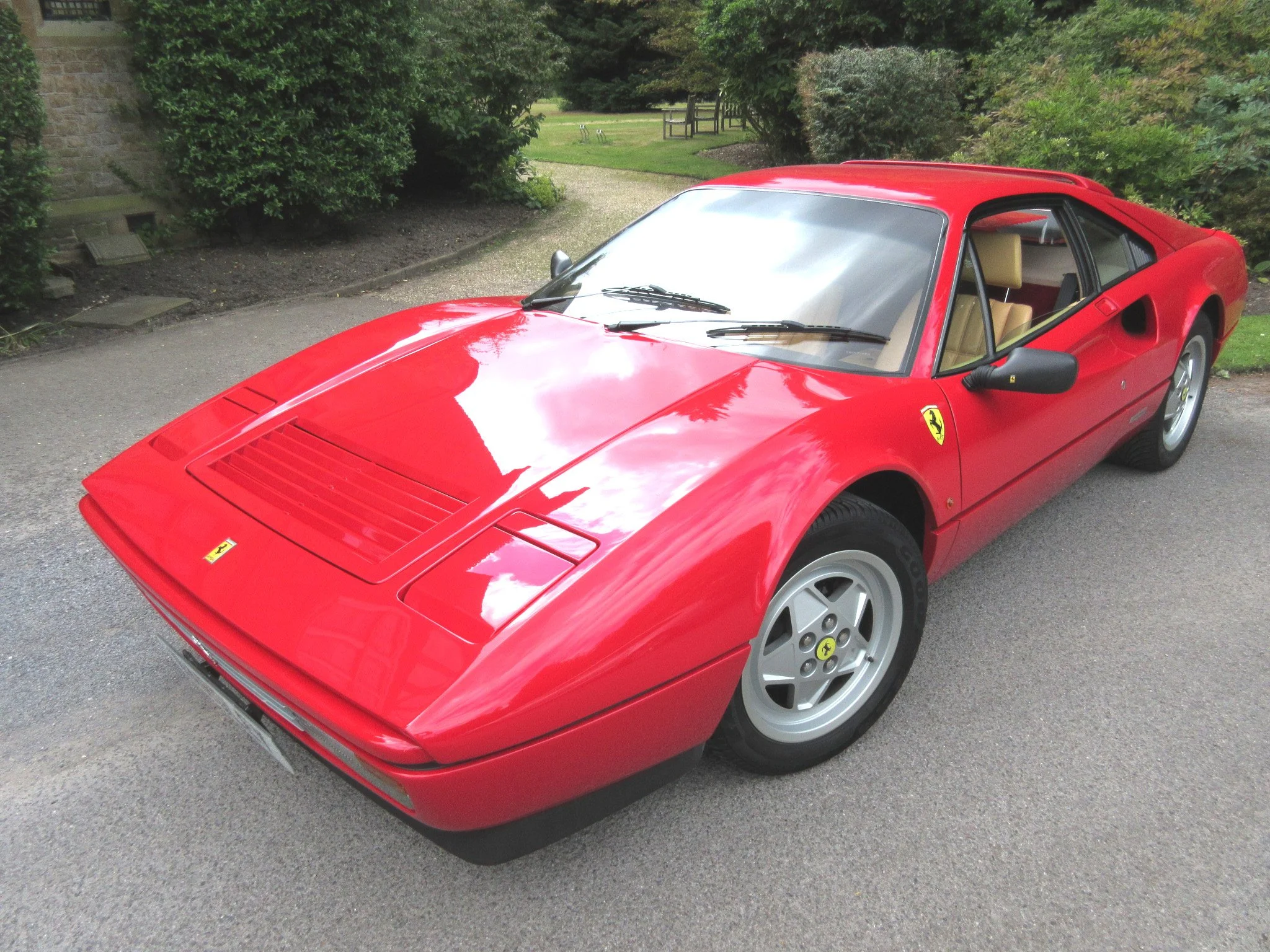
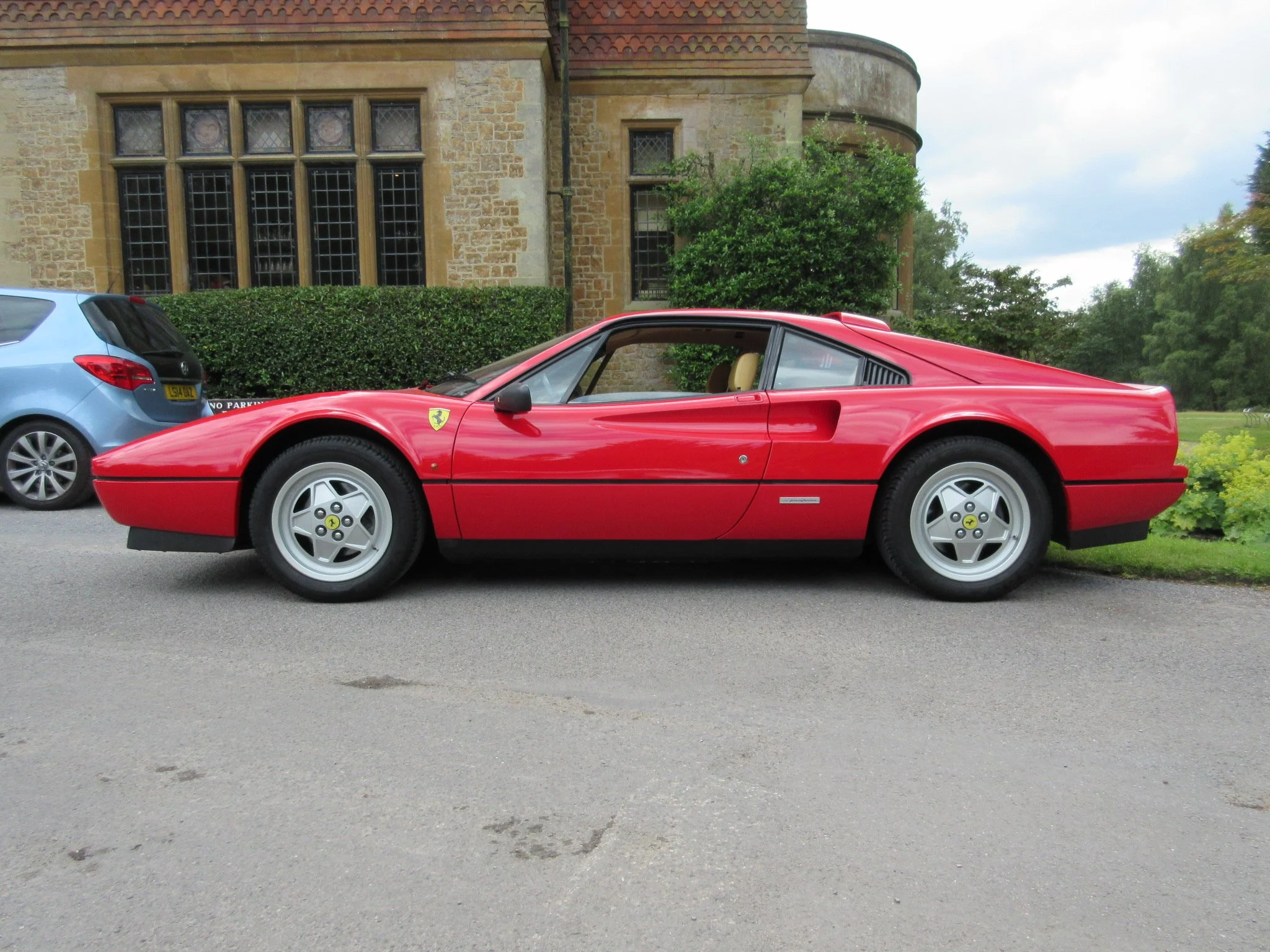
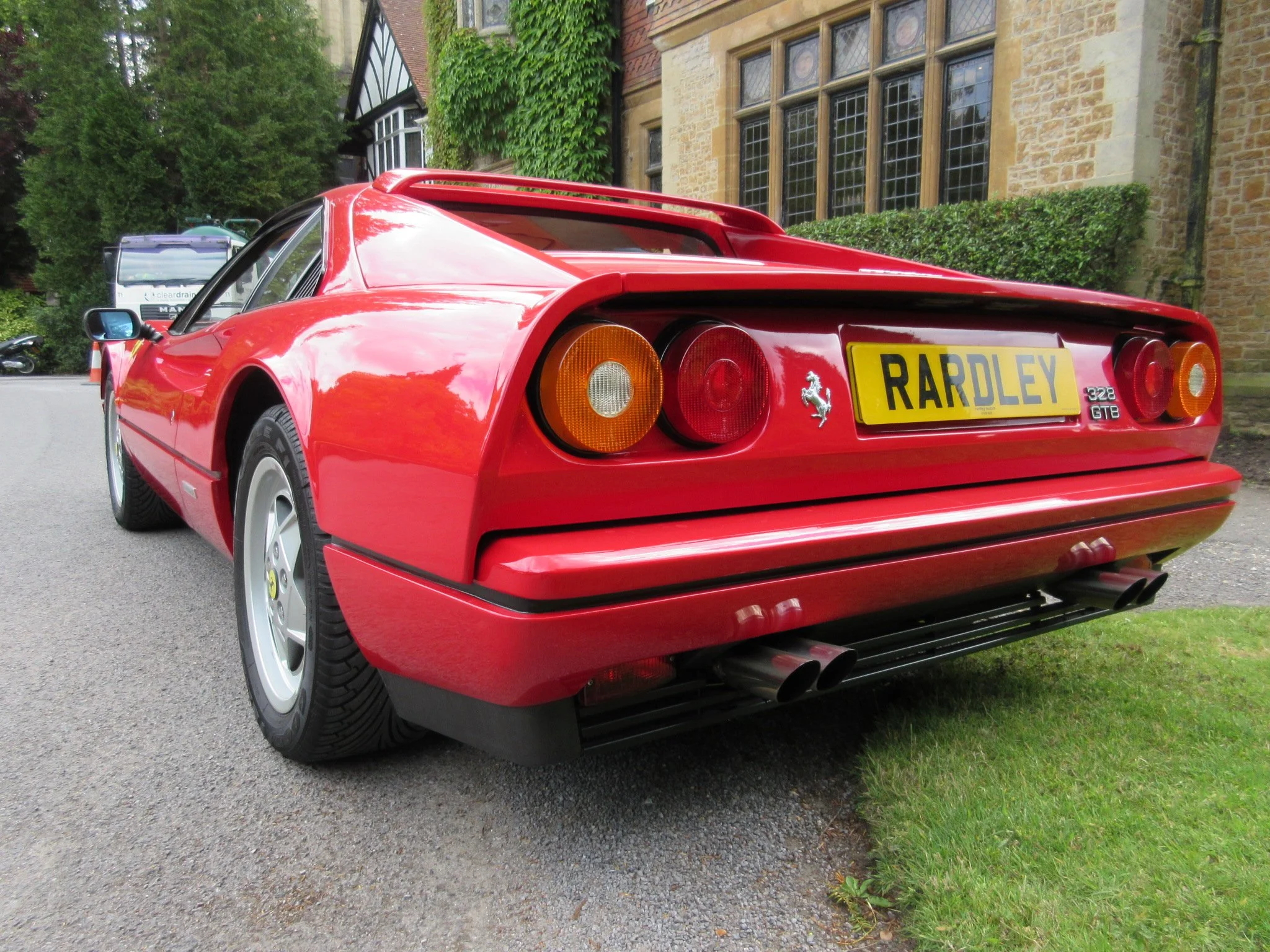
1988 Ferrari 328 GTB-6,000 miles, One of approx.40.
YEAR: 1988
MILEAGE: 6,900 miles
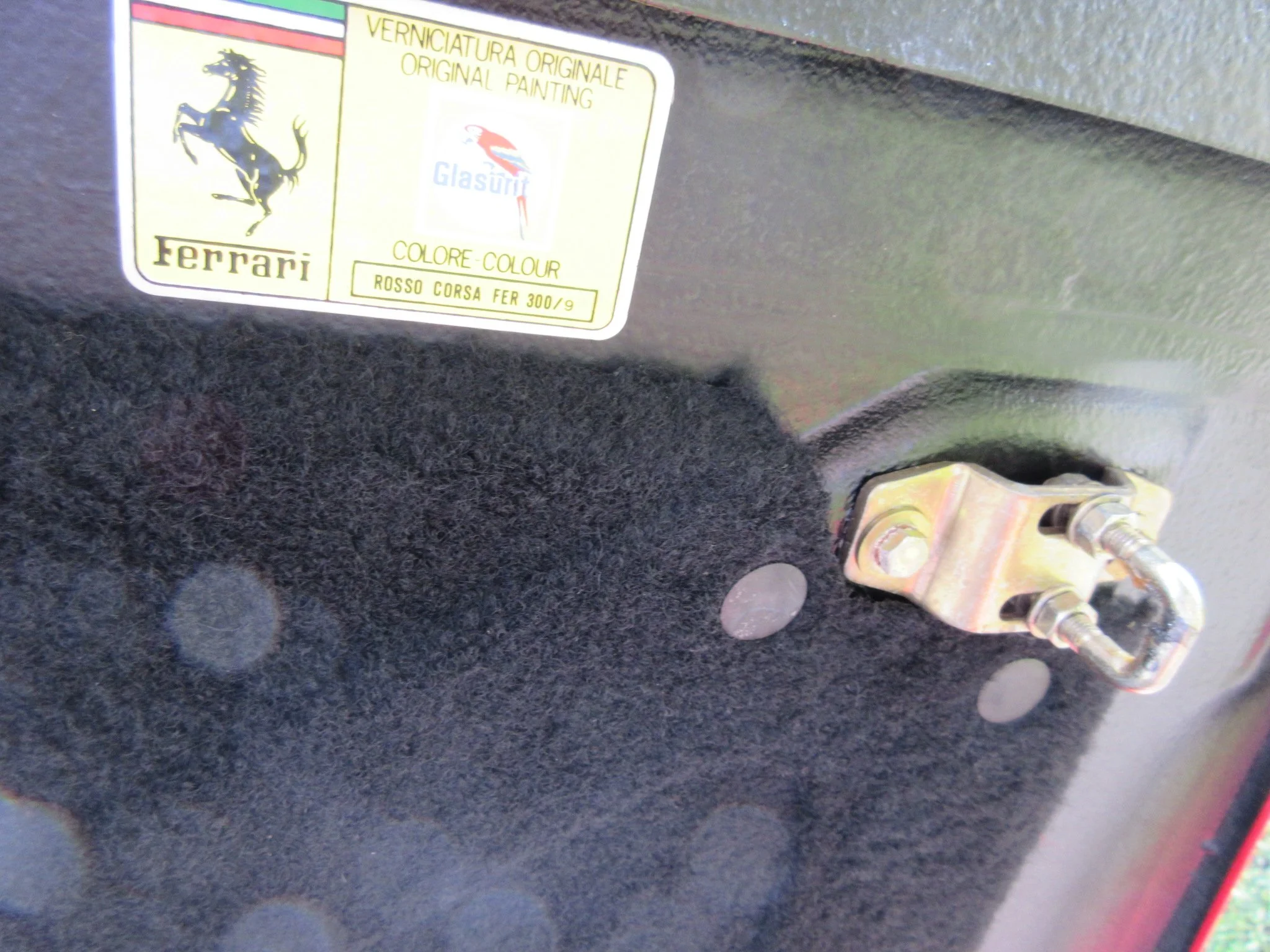
EXTERIOR COLOUR: Red
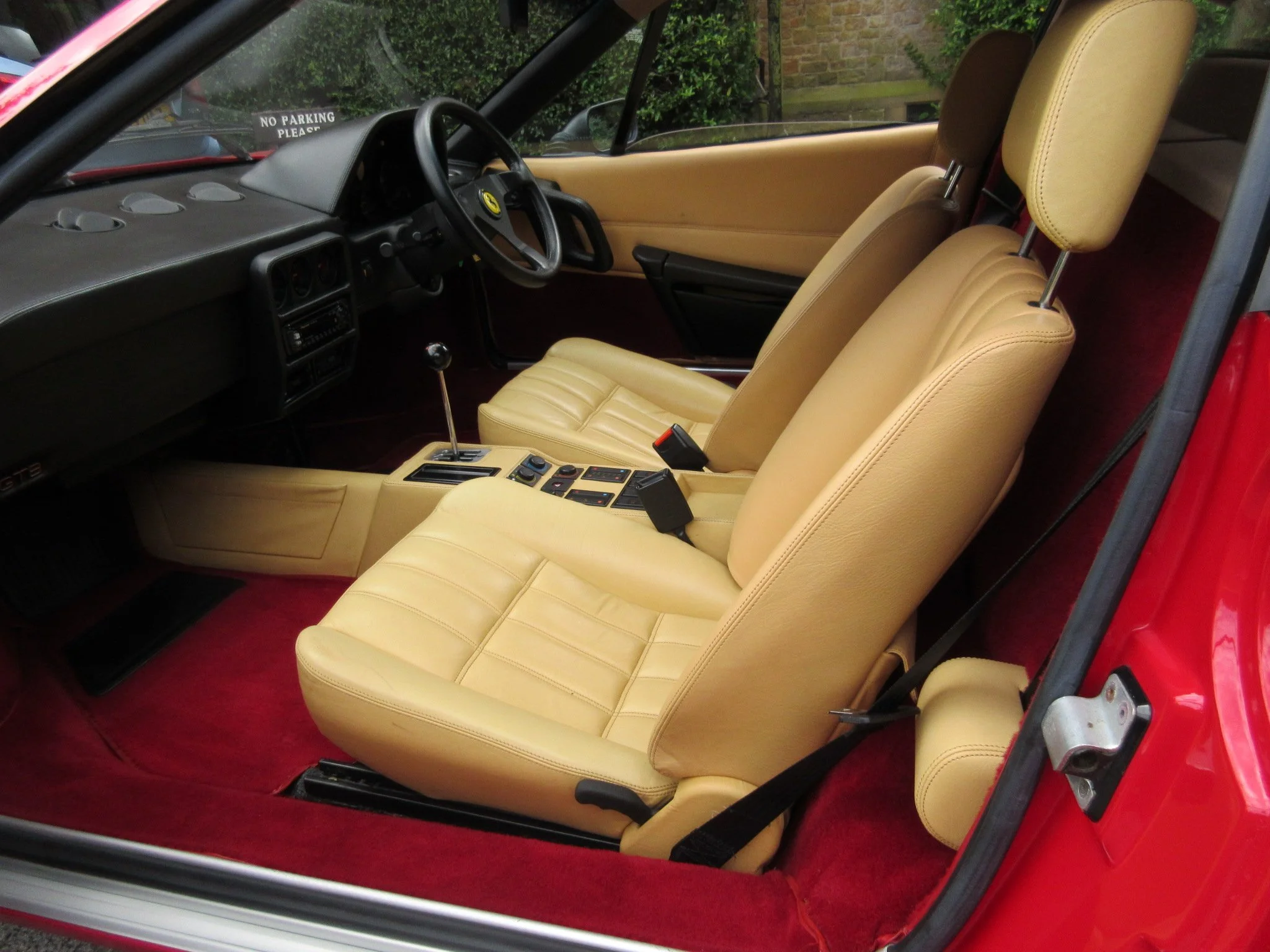
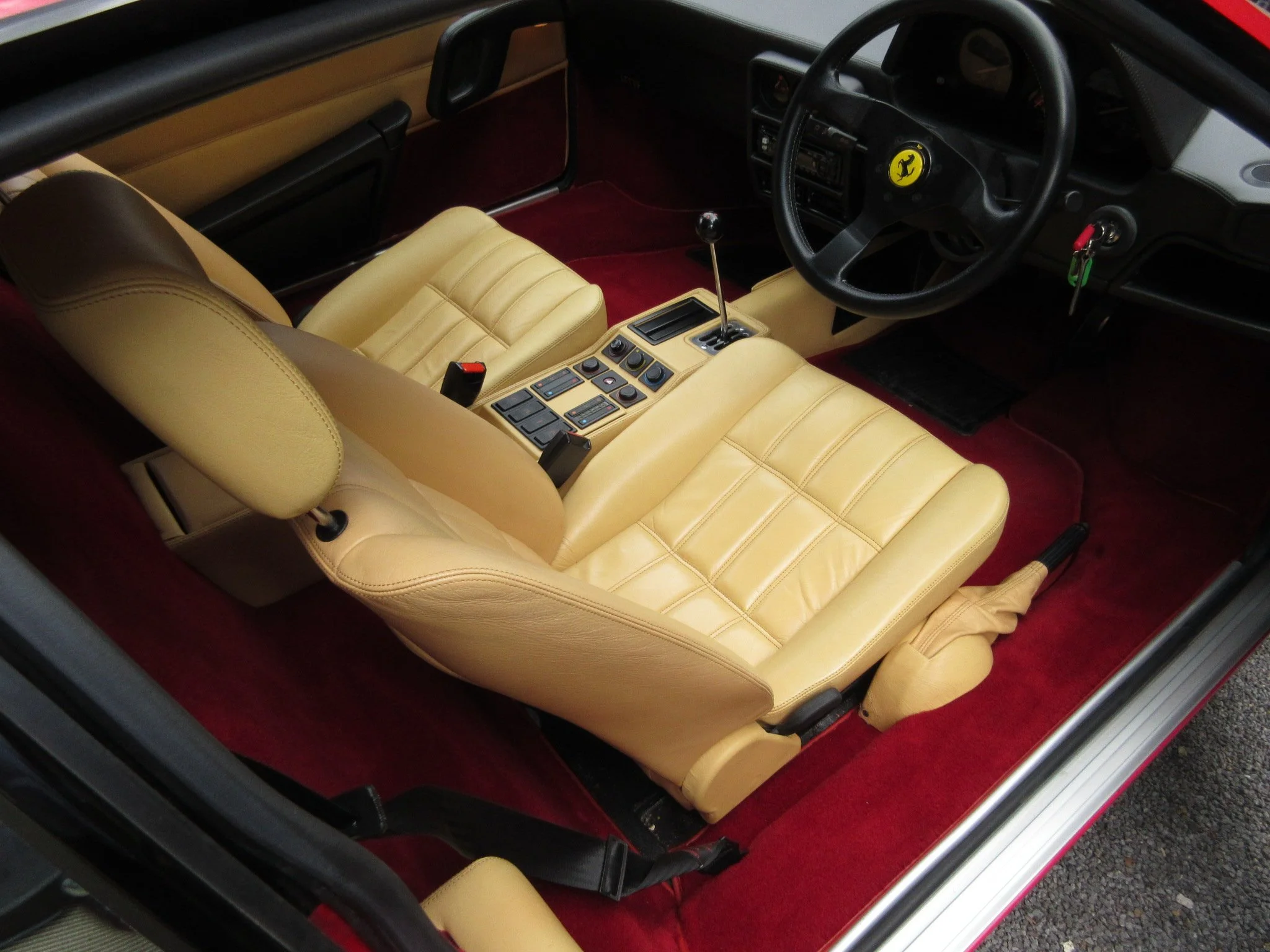
INTERIOR COLOUR: Beige hide with dark red carpets
TRANSMISSION: Five speed
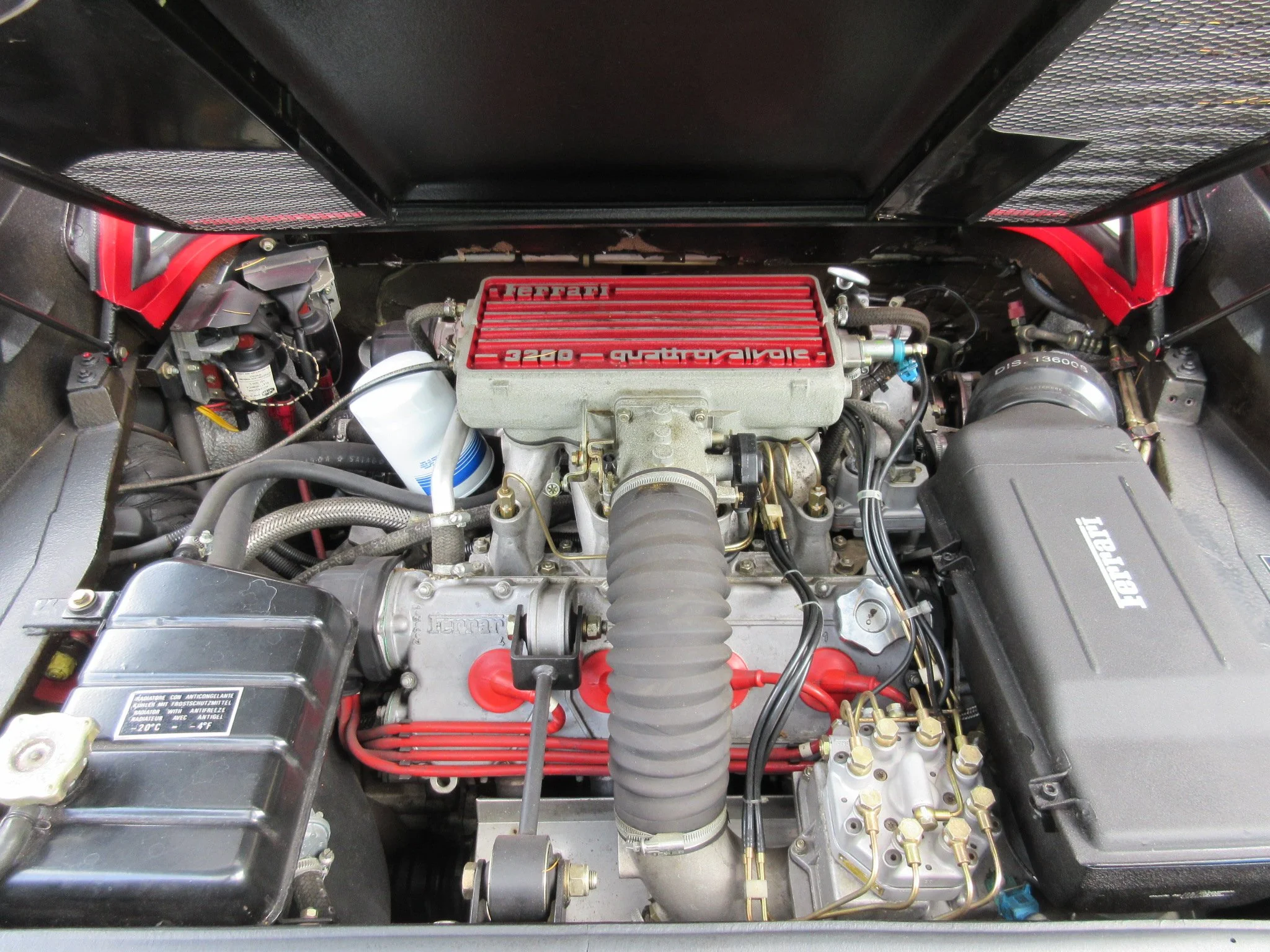
ENGINE: V-8. 3.2 litre Four valves per cylinder.
TOP SPEED: 163 mph
HORSEPOWER:270 BHP@7,700 rpm.
£179,990
Ordered by Maranello Sales on 10th December 1987, with an order placed with the factory on 13th March 1988. The car was completed by the factory on 26th September 1988, making it a 1989 model year example, before being delivered to the UK by truck-one of 130 officially imported of which just 53 were ABS optioned. Of the 130 ,some 99 remain taxed/SORN’d-so approximately 40 ABS optioned GTB’s remain? The car was delivered new and first registered by Maranello Sales on 28th October 1988. The list price at the time (1st October 1988) was £44,999.50, plus delivery, number plates and road tax. In addition, the car was specified with air conditioning (£1,681.87), anti-lock brakes (£1,557.30), and a colour-coded rear aerofoil (£280.31).
Passing through the ownership of three further registered keepers ,just under 18 years later, when it was purchased by the next keeper from Rardley on 2nd August 2006 with 5,708 recorded miles. Although the vehicle was never registered in his name, he viewed, paid for, and trailered the car home on the same day without even starting the engine, other than to load it onto the trailer. A garage owner, he displayed the car on the second floor of his showroom. He later sold the car to a close friend, who registered it to his company on 31st May 2012. Before joining a small private collection alongside including a Ferrari 360 Modena and later a 458 Italia as well as a number of desirable Porsche’s.
We purchased the car on 25th August 2015 with 6,200 miles and sold to a friend, a 57-year company director from Hampshire on 5th September 2015 with 6,254 miles. The car was stored in a Carcoon , venturing out on one occasion for a Autocar magazine photo shoot and article cover date 7th July 2021.
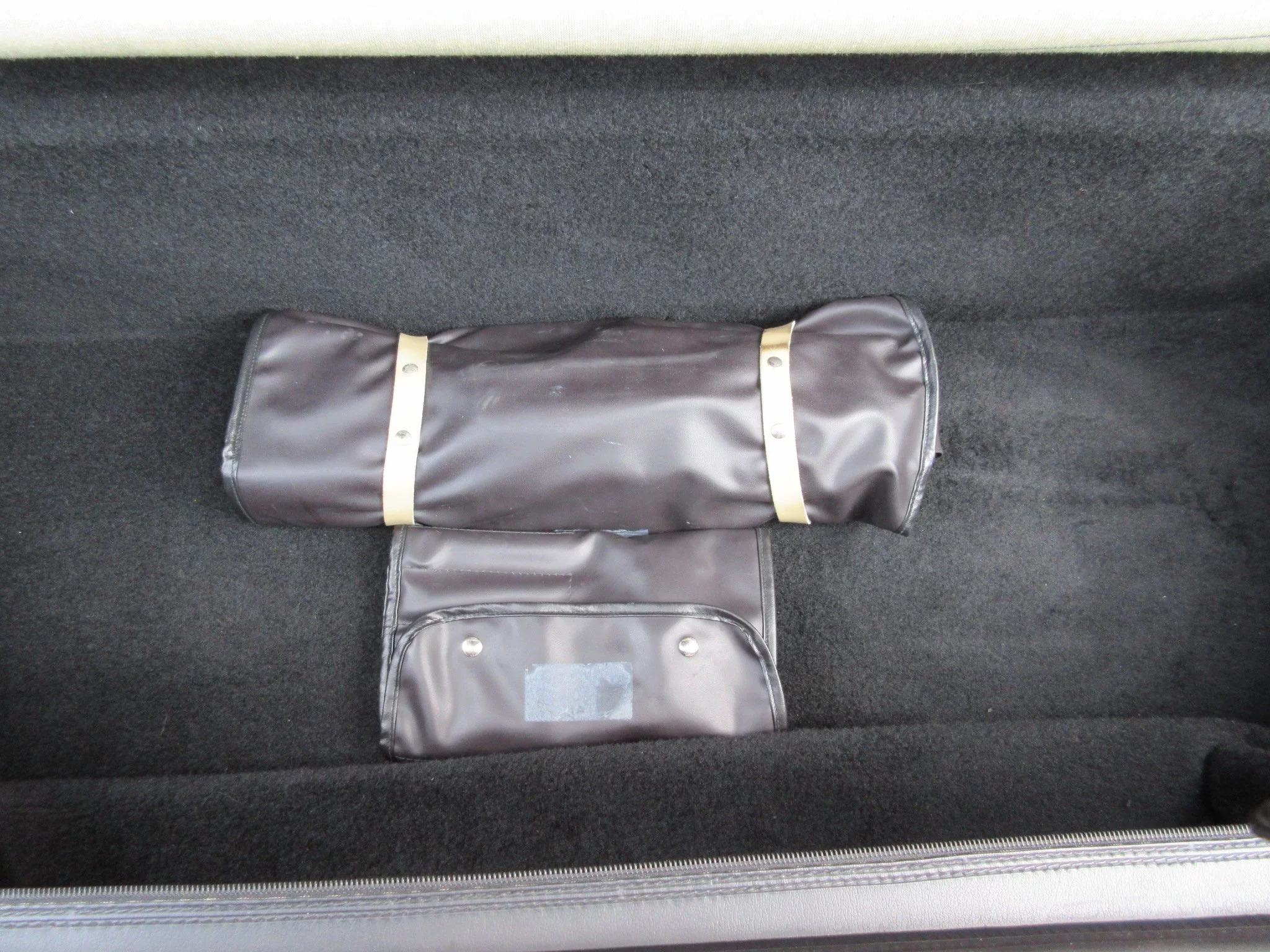
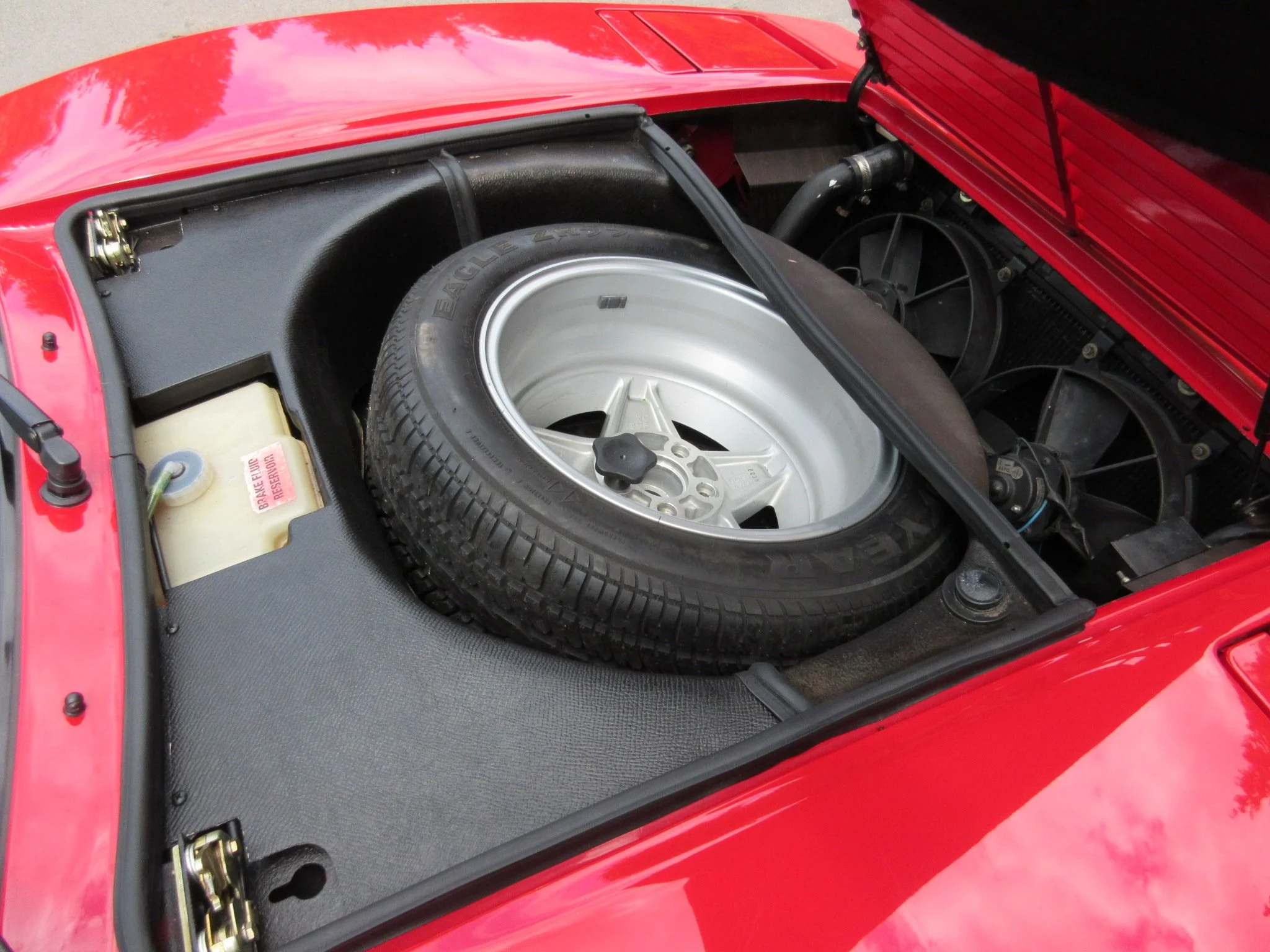
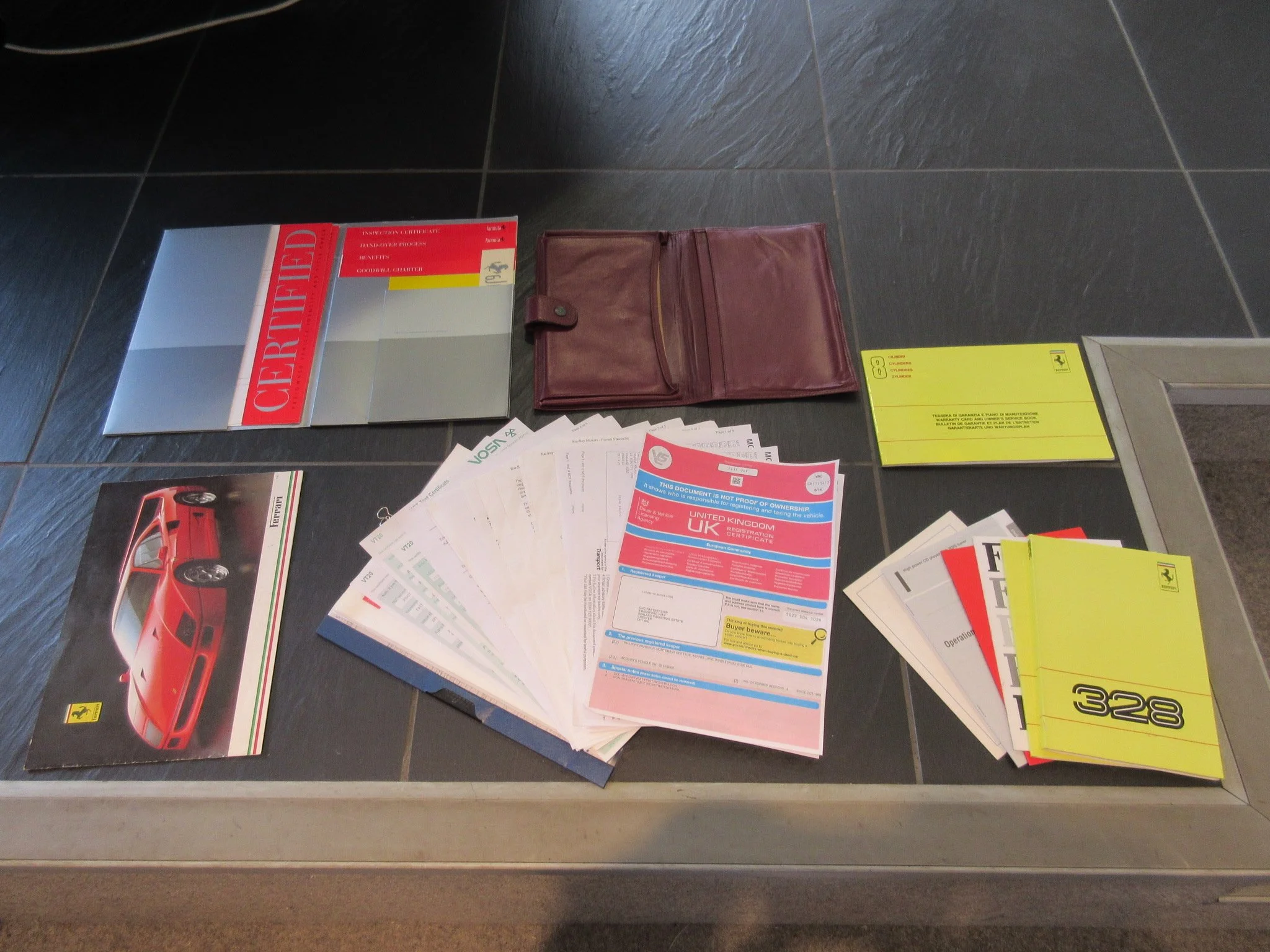
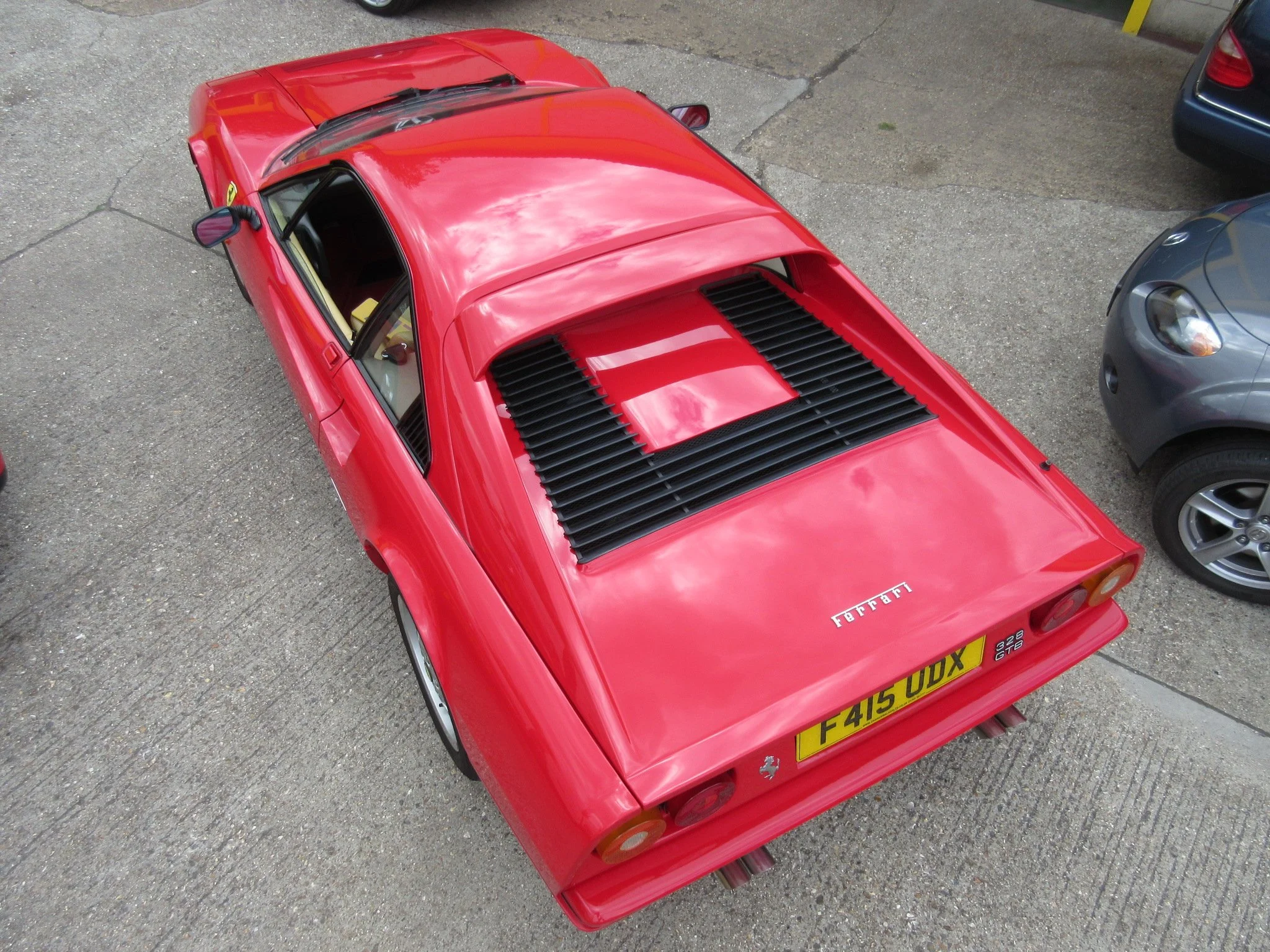
The car is complete with factory original hand book, wallet service book and tools. The car also benefits from a stainless steel sports exhaust. -and with this documented low mileage this is a rare opportunity indeed to acquire such a superb example.
History: 328 GTB
The 308 series had won universal acclaim from both customers and critics, and its natural evolution continued with the 328 GTB, a berlinetta fitted with the new 3.2-litre version of the V8. This new engine (again featuring four valves per cylinder) produced a specific output of 85 bhp per litre, compared with 82 for the 4-valve version of the 308.
Pininfarina’s original design, which was still both attractive and elegant, was revised to further improve the aerodynamic characteristics of the 308 models.
The 328 GTB model, together with the targa roof 328 GTS variant, were the final developments of the normally aspirated transverse V8 engine 2 seat series. The 328 figures in the model title referred to the total cubic capacity of the engine, 3.2 litres, and 8 for the number of cylinders. The new model was introduced at the 1985 Frankfurt Salon alongside the Mondial 3.2 series.
The Body
Essentially the new model was a revised and updated version of the 308 GTB, which had survived for almost a decade without any radical change to the overall shape, albeit with various changes to the 3 litre engine.
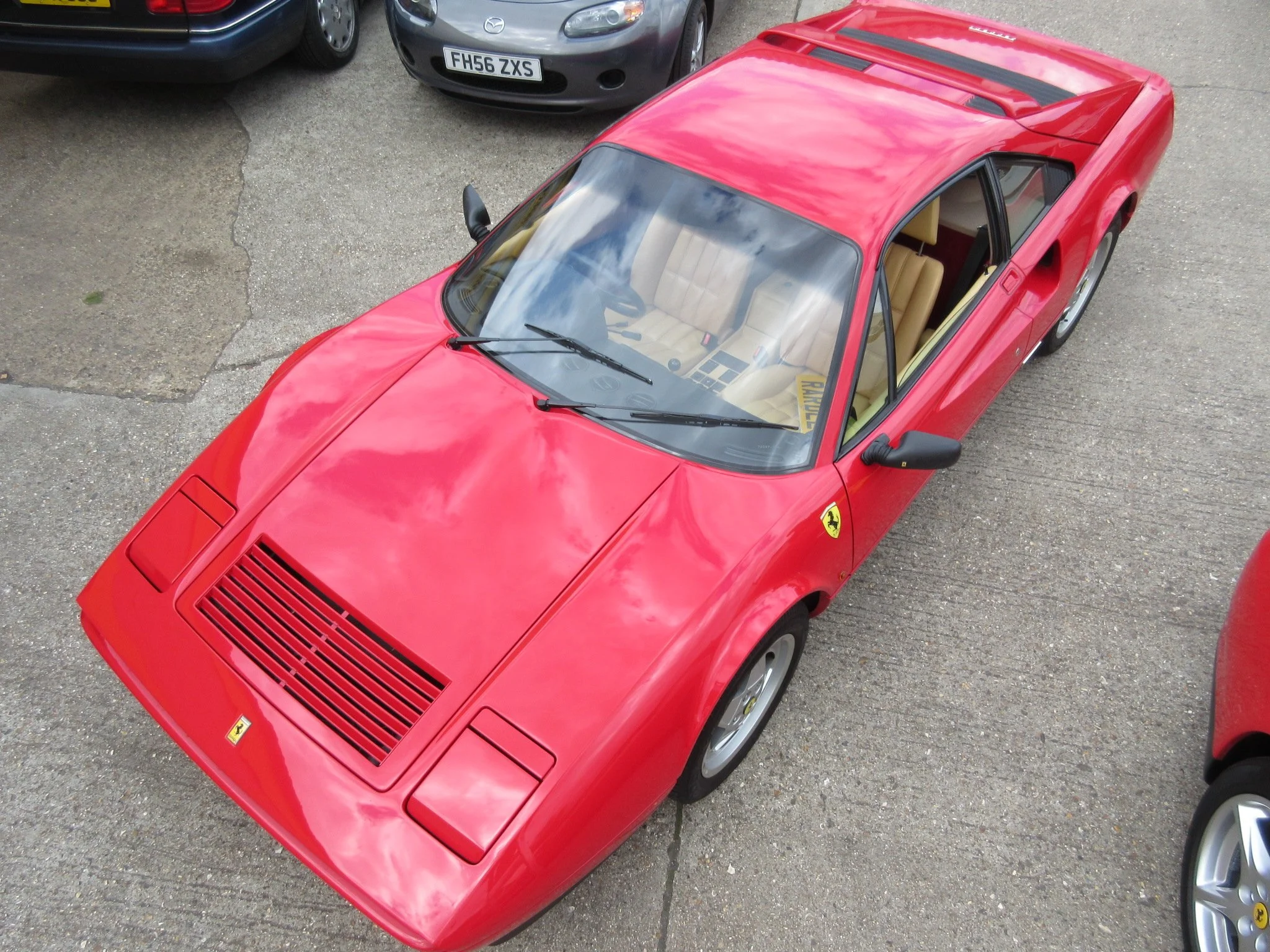
The 328 model presented a softening of the wedge profile of its predecessor, with a redesigned nose that had a more rounded shape, which was complimented by similar treatment to the tail valance panel. The revised nose and tail sections featured body colour bumpers integral with the valance panels, which reflected the work done concurrently to present the Mondial 3.2 models, with which they also shared a similar radiator grille and front light assembly layout.
Thus all the eight cylinder cars in the range shared fairly unified front and rear aspects, providing a homogeneous family image. The exhaust air louvres behind the retractable headlight pods on the 308 series disappeared, coupled with an increase in the size of the front lid radiator exhaust air louvre, which had been introduced on the 308 Quattrovalvole models, whilst a new style and position of exterior door catch was also provided.
The interior trim also had a thorough overhaul, with new designs for the seat panel upholstery and stitching, revised door panels and pulls, together with more modern switchgear, which complimented the external updating details. Optional equipment available was air conditioning, metallic paint, Pirelli P7 tyres, a leather dashboard, leather headlining plus rear window surround and a rear aerofoil (standard on Japanese market models).
The Engine
The V8 engine was essentially of the same design as that used in the 308 Quattrovalvole model, with an increase in capacity to 3185cc, with a bore and stroke of 83mm x 73mm, and a type reference number F 105 CB 000. The engine retained the Bosch K-Jetronic fuel injection system of its predecessor, but was fitted with a Marelli MED 806 A electronic ignition system, to produce a claimed power output of 270bhp at 7000rpm. As with the preceding 308 models the engine was mounted in unit with the all synchromesh five speed transmission assembly, which was below, and to the rear of the engine’s sump.
The 328 GTB continued in production for four years, until replaced by the 348 tb model in the Autumn of 1989, during which time 1344 examples were produced in the chassis number range of 58735 to 83017. The early part of the series was numbered in the Ferrari odd number road car chassis sequence, and later examples (post chassis number 75000) in the continuous numbe
The Chassis
In the middle of 1988 ABS brakes were made available as an option, which necessitated a redesign of the suspension geometry to provide negative offset. This in turn meant that the road wheel design was changed to accommodate this feature. The original flat spoke “star” wheels became a convex design, in the style as fitted to the 3.2 Mondial models, whether ABS was fitted or not.
The main European market 328 GTB models had a tubular chassis with a factory type reference F 106 MB 100. Disc brakes, with independent suspension via wishbones, coil springs, and hydraulic shock absorbers, were provided all round, with front and rear anti roll bars. There were various world market models, each having slight differences, with right and left hand drive available.
The nature of the design of the 308, combining elements of the Berlinetta Boxer and the 246 Dino, was of a pure sporting nature. It was strictly a two seater, with no pretence to being anything more.
The biggest surprise concerning the bodywork was the use of fibreglass for the main body shell (the front deck lid was the only exception, being of aluminium). The reasons why this material was chosen have never been divulged by Ferrari, leading to a number of speculations. It was, of course, a weight-saver, and certainly an effective way to prevent the body corrosion which plagued the 365 GTB/4 and 246 Dino (both, like the 308 GTB, designed by Pininfarina but built by Scaglietti). It has also been suggested that the use of fibreglass allowed production of the car to begin much earlier, but was never intended as anything more than a stopgap measure until the dies for steel bodywork could be produced. Finally, it has even been suggested that the first batch of 308 GTB's were in fibreglass so the car could be homologated for competition in that form, with again, a weight advantage. Whatever the reason, there were no complaints about the quality and finish of the fibreglass bodywork which was superb.
Mechanically the 308 GTB was obviously a direct descendant of the 308 GT Dino. The engine was the same 90° V8 with bore and stroke dimensions of 81mm and 71mm, giving a displacement of just under three litres. All main engine castings were of traditional Ferrari light alloy, with cast iron wet cylinder liners. It had four overhead camshafts (two per bank) driven by the toothed belts pioneered on the 365 GT4/BB, two valves per cylinder, and four Weber twin choke carburettors. The end result, the factory claimed, was 255 horsepower at 7700rpm. It was mounted transversely, just ahead of the rear wheels, and transmitted its power through a five-speed transaxle, which was, again, identical to the 308 GT4 Dino's unit except for the higher fifth gear ratio. The clutch was a dry, single plate, mechanically operated unit. One major change, at least as originally introduced, was the adoption of a dry sump lubrication system for the engine.
Finally, a change in the exhaust system resulted in only a single tailpipe, on the left side. The chassis was also straight from the 308 GT4 Dino, with 210mm missing from the wheelbase giving a total wheelbase dimension of 2340mm. Front and rear suspensions (and the track dimensions of 1460mm each) were also unchanged. Of course, the car had four wheel independent suspension and disc brakes all round. New on the 308 GTB were the wheels, which copied the five-pointed star design of the Daytona but were mounted via five lug bolts. One final innovation with the 308 GTB distinguished it from the 308 GT4 Dino. Whereas the first 308 had been seen as a continuation of the Dino as a separate marque, with the cars bearing a number of Dino badges and receiving chassis numbers in the even number five digit sequence of the 246, the new 308 carried only Ferrari badges and was numbered in the odd numbered sequence that so far had been reserved for only the 12 cylinder production Ferraris.
Whilst fuel injection had been a useful adjunct to performance in its previous applications by Ferrari, its introduction on the 400GT and 308 series cars had been more in the nature of a "civilising" factor with the important by-product of bringing the cars closer to current legislation on exhaust emissions. The resulting decrease in power, though bad enough in Europe was even more telling in the US. Whilst speed limits might stay at unrealistic levels compared to the performance potential of a Ferrari, customers did not take kindly to continuing loss of power, no matter how worthy or otherwise the cause. In a move to restore power, Ferrari decided to introduce 4-valve heads for the 308 series. This came about in the latter part of 1982 shortly before they were seen on the Mondial. By way of identifying the cars the "i" was dropped from the designation at the rear - all the cars were by then fuel injected - in favour of the Italian script "Quattrovalvole". It has not so far been shortened to "QV" although that is the way they are generally spoken of. Introduced at the 1985 Frankfurt Motor Show, the 328 V-8 has evolved through fuel injection and 4 valve heads from the unit introduced in 1974 to power the 308GT4. With the bore and stroke dimensions increased to 83mm and 73.6mm respectively, capacity was raised to 3185cc. Power went up to 270bhp at 7000rpm - an increase of some 12.5% - and torque to 224.2lbs/ft at 5500rpm - an increase of some 17%. A number of internal design modifications, including raising the compression ratio from 8.8 to 9.8:1, were incorporated. Although in general outward appearance the new cars were very similar to the previous models, the opportunity was taken to improve those items that affect drag and stability. The front air intake for the radiator, brakes and air conditioning was redesigned. The bumpers were integrated into the underfaring and painted to match the colour of the car. The radiator air discharge was ducted into what was referred to as a 'defined area' under the bonnet in the interests of efficiency. New lights, which incorporated parking, turn and flashing as on the Testarossa, were fitted. At the rear the bumper was painted to match the body and was also integrated into the underfaring along with the exhaust tailpipes and rear foglights.
Within the interior, the dashboard was a completely redesigned and new style door handle which incorporated the controls for the electric windows, exterior door mirrors and courtesy lights were used.
Whilst every effort is made to ensure the accuracy of the above details, we do not warrant that such details are accurate.
Mike Wheeler
Copyright Mike Wheeler 2026
“This material is protected by the laws of copyright. The owner of the copyright is Mike Wheeler. These details form part of my database, and are protected by the database rights and copyright laws. No unauthorised copying or distribution without my written permission”