
Under offer-Ferrari 512 BBi-One of two
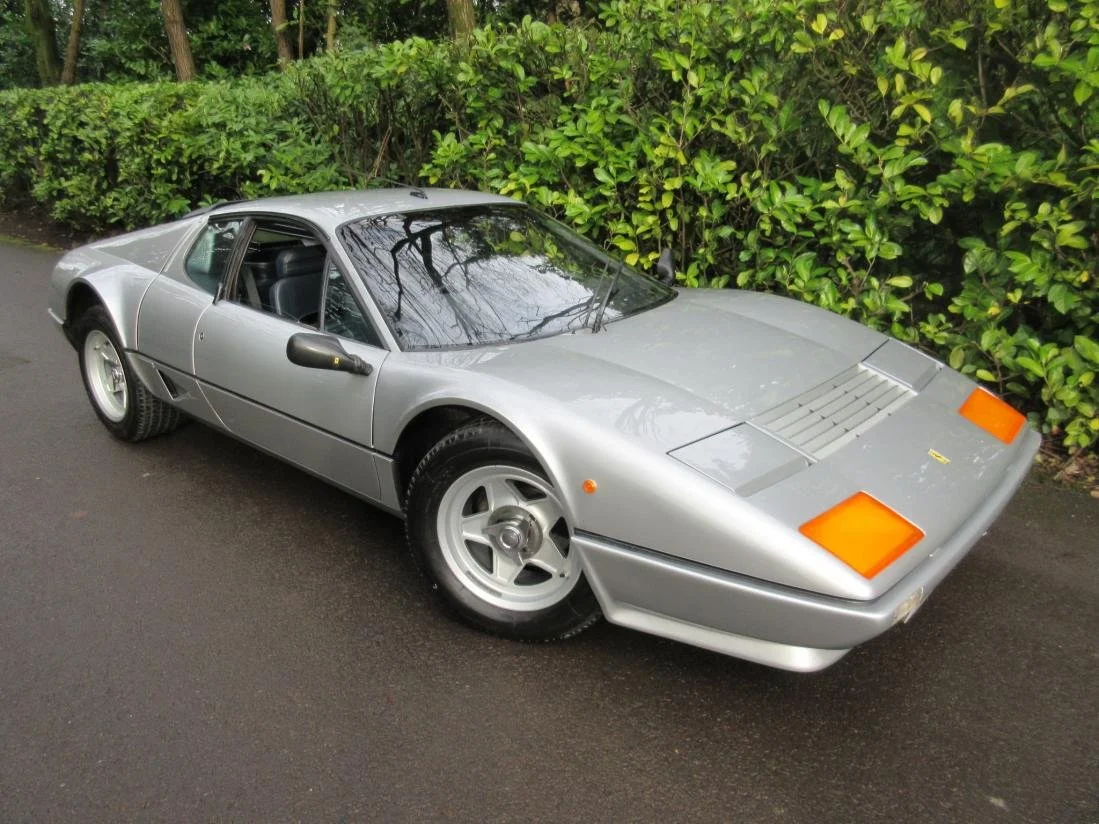
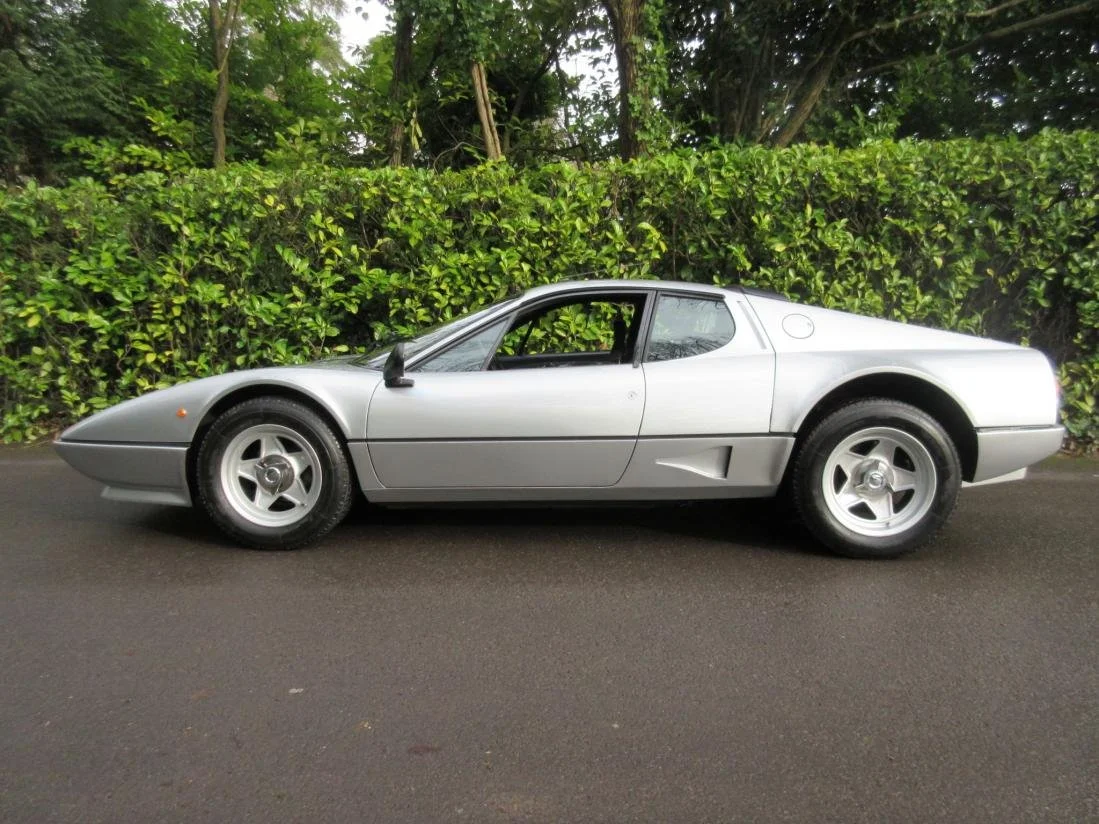
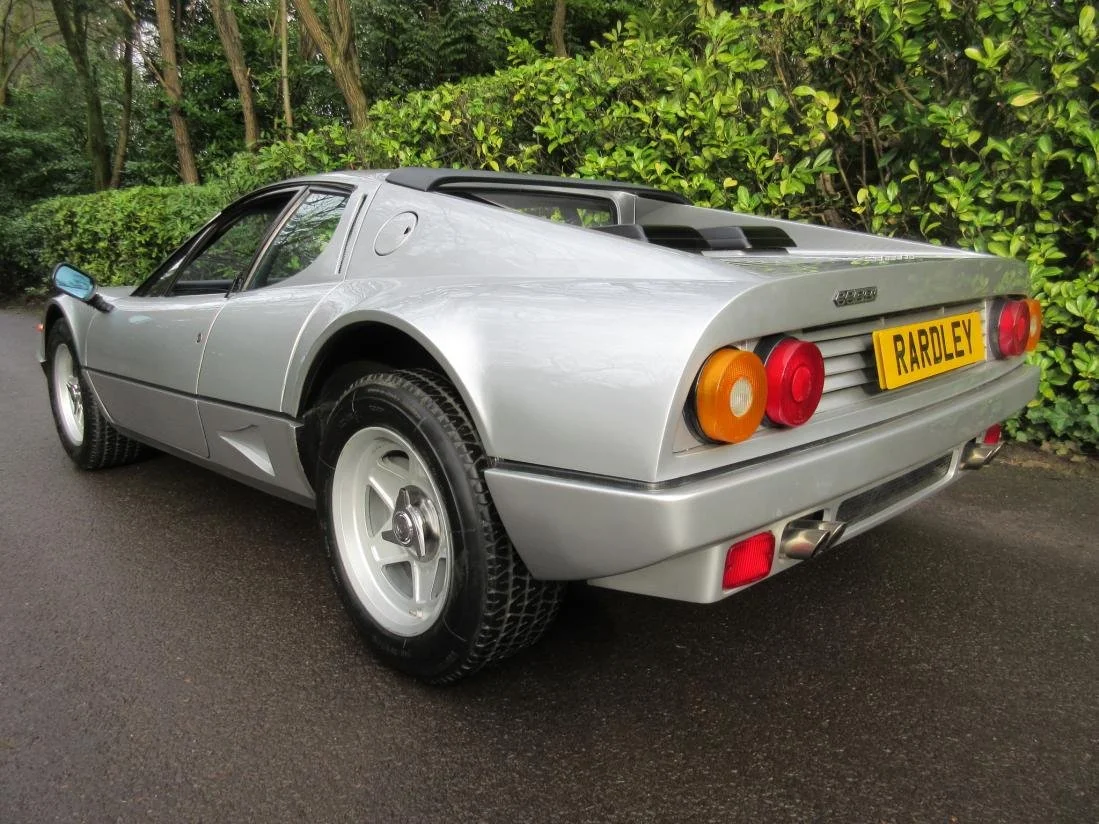
YEAR: 1984
MILEAGE: 30,500 Miles
EXTERIOR COLOUR: Metallic silver grey
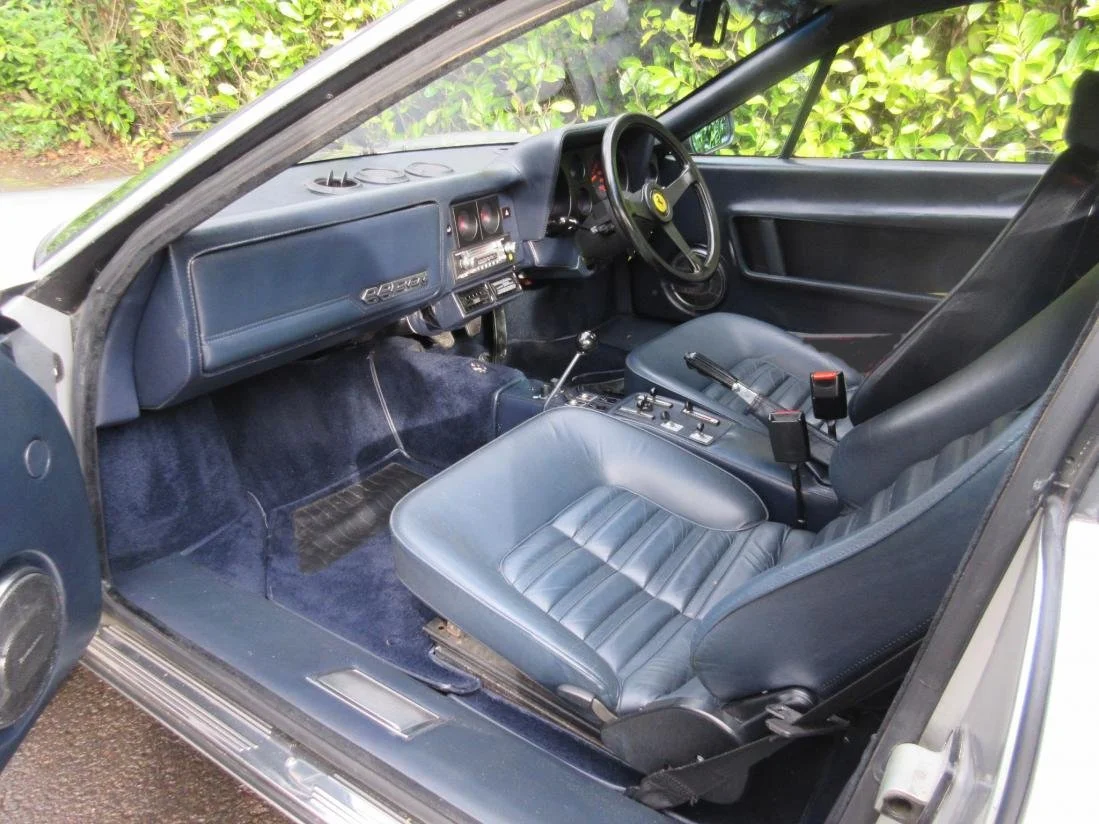
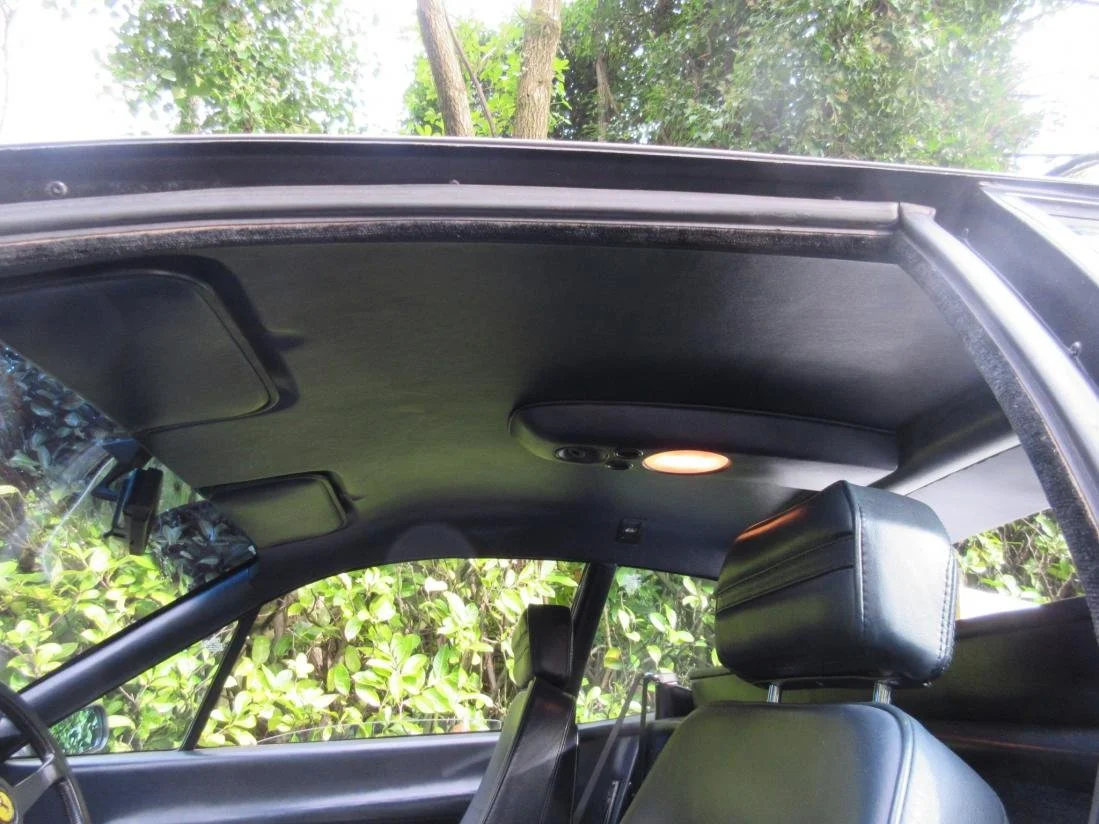
INTERIOR COLOUR: Full dark blue hide
TRANSMISSION: 5 Speed Manual
ENGINE: Flat 12 .5.0 litre Four overhead camshafts
TOP SPEED: 180 mph
HORSEPOWER: 340bhp@6,000 rpm
SOLD-Another required.
Completed by the factory and invoiced to Maranello Concessionaires Ltd on 28th October 1983 finished in metallic silver grey Argento 101/c with full dark blue hide and dark blue carpets— one of 214 built that year — for delivery to the UK by truck-one 42 officially imported with 23 remaining taxed/SORN’d and just two in silver-, with the weight noted as 1,499 kg. The car was subsequently invoiced to Maranello Sales Ltd (the supplying dealer) on 31st January 1984, noting the optional all-leather interior (including headlining and seats).
The first owner, a 55-year-old gentleman from West Sussex, took delivery on 6th February 1984. The list price as of 1st January 1984 was £48,749.47, plus £391.07 for the all-leather interior, in addition to delivery, number plates, and road tax.
Four years later it was purchased from Maranello Sales Ltd on 12th April 1988 by a gentleman and Ferraristi from London and Lincolnshire with 11,790 miles, for £125,000. This same gentleman owned the ex-Scuderia Montjuich Ferrari 512M , with which he had previously set the production car “Flying Mile” record at 191.64 mph on 27th April 1977 at RAF Cosford, Gloucestershire.
A sales invoice from Leicestershire Ferrari agents Graypaul, dated 30th January 1997, shows the car being sold to a 42-year-old gentleman from London with 20,070 miles, taking a 1996 Ferrari 456 GTA in part exchange. The car was never registered to this gentleman, with the next registered owner being a doctor on 26th April 1997, with 20,254 miles, once again via Ferrari agents Graypaul.
Sold by myself while at Surrey specialists Talacrest on 16th October 1999 to its fourth and penultimate owners, a couple from Buckinghamshire. They purchased the 512 BBi with 23,101 miles for £42,600, along with a 308 GTS (#30653). The gentleman, who worked for BMW in Bracknell, and his wife later moved to Australia, taking the 308 GTS with them, leaving the 512 BBi with me to sell.
The 512 BBi was sold back through Talacrest to the last registered owner, a 39-year-old businessman from the Midlands, on 2nd September 2005 at 24,375 miles, joining his Ferrari 400i. Maintenance continued with Talacrest until their workshop closure, after which Rardley Motors took over the car’s servicing.
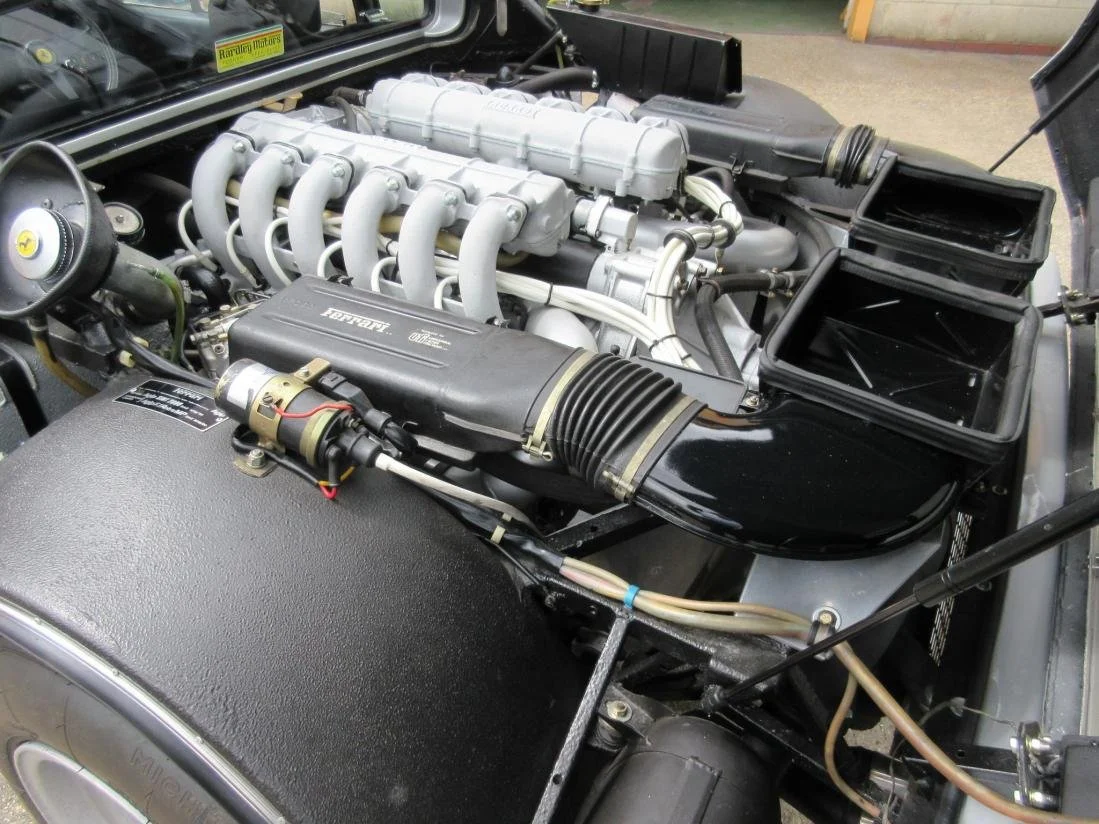
During a service in late 2011, excessive crankshaft end float was detected. The decision was made to overhaul the engine, which was carried out on a “when available” basis over the following two and a half years. The overhaul was completed on 6th May 2014, at 29,234 miles.
Purchased in April 2021 by an overseas businessman along with a 512 BB and BBi,and professionally stored in the UK. He also had the lower half of the body repainted in semi-matt black, as per the original Ferrari 512 BBi brochure.
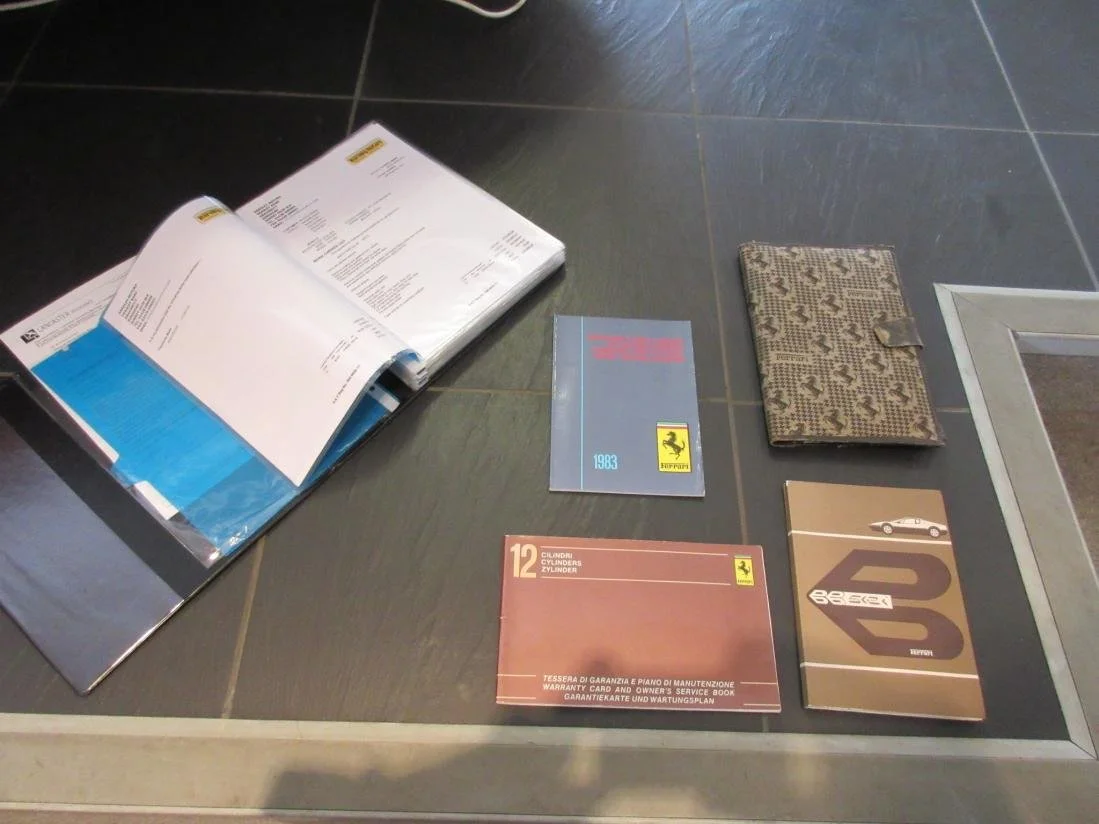
The car is complete with its factory original service book and handbook wallet, as well as comprehensive file of past invoices and MOT certificates.
History:
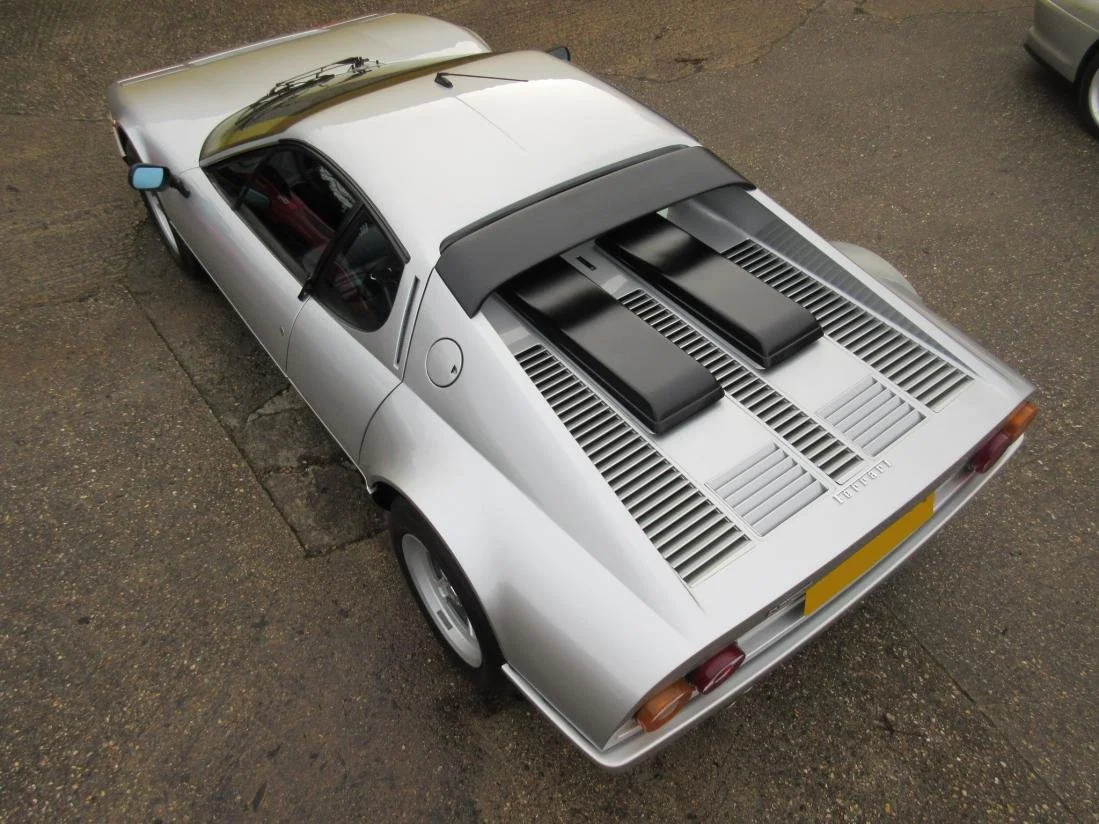
Externally the new model was recognisable by the re-designed rear bumper and wheels, the side NACA duct finished in black and the body-colour wing mirror. Inside, the classic Connolly leather seats featured a central wool textile insert and the car was fitted with air conditioning and central locking as standard.
THE BODY
The 512 BBi was introduced at the 1981 Frankfurt Salon, to replace the 512 BB model, the “i” suffix denoting a change from carburettors to fuel injection. Apart from the adoption of fuel injection, in line with the other models in the Ferrari range at the time, there were minor cosmetic and mechanical changes.
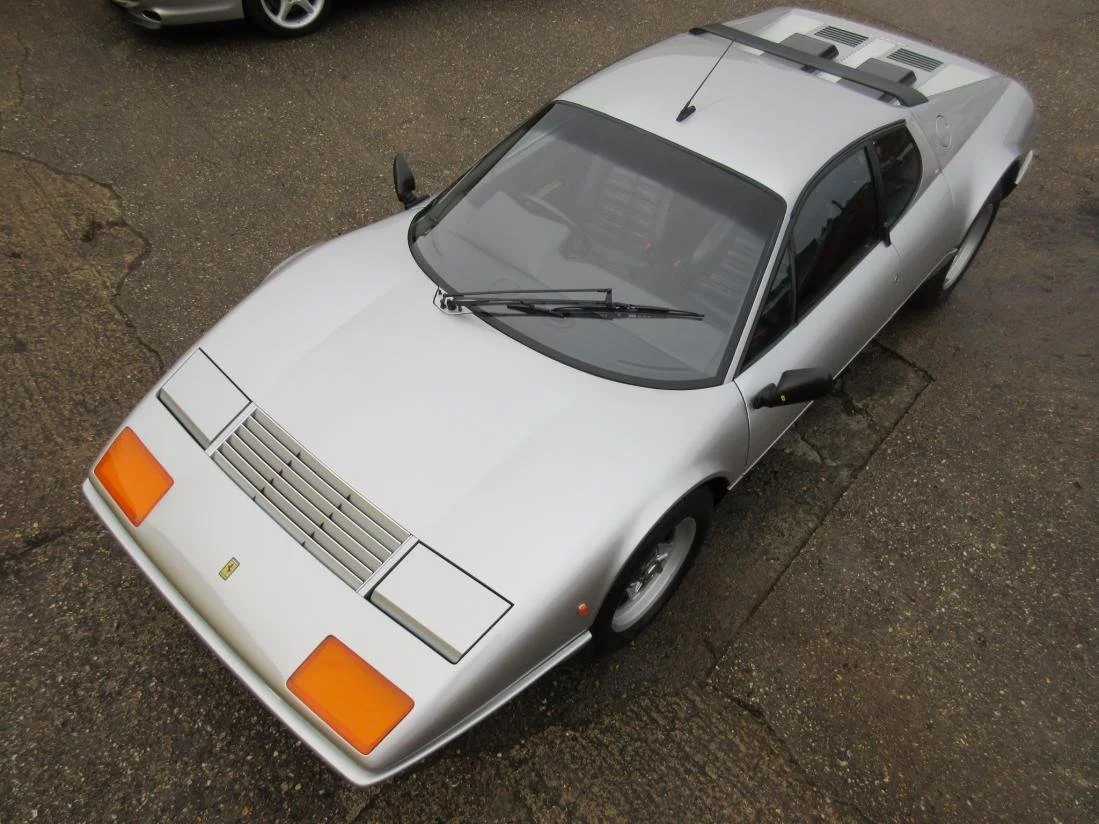
At the front the plain aluminium egg-crate radiator grille stopped short of the driving lights, which were now exposed in the grille extremities, with small rectangular parking lights mounted in the bumper section above them. At the rear the engine louvre arrangement was modified and a new shroud was provided to the exhaust system, which incorporated hazard warning lights. A new design of door mirror was fitted, changes were made to the interior, including a black spoked steering wheel, and the availability of “Zegna” wool cloth seat centres as an option. The road wheels became the same width front and rear, fitted with Michelin TRX tyres, which had the effect of increasing the front and rear track to 1508mm and 1572mm respectively.
The body was mounted on a 2500mm wheelbase chassis, which had factory reference number F 102 CB 100. All were numbered in the odd chassis number road car sequence, and the construction followed the same principles as its predecessor of a tubular steel chassis frame with a monocoque central cell. Again as with its predecessor it was available in right or left hand drive form, and again no USA market versions were built.
THE ENGINE
The standard road wheels were alloy five spoke “star” pattern, with a knock off spinner on a Rudge hub, although legislative requirements in some markets dictated the fitment of a large octagonal hub nut. The wheels covered large ventilated disc brakes with twin hydraulic circuits, and servo assistance. Independent suspension was provided all round, via wishbones, coil springs, and hydraulic shock absorbers, with twin rear units, together with front and rear anti roll bars.
The aluminium flat twelve cylinder engine was of the same configuration as its predecessor with a cubic capacity of 4943cc, and 82mm x 78mm bore and stroke, with factory type reference F 110 A 000. It featured belt driven twin overhead camshafts per bank, with dry sump lubrication and a hydraulically operated clutch. The 512 BBi was fitted with Bosch K-Jetronic fuel injection, and had the same claimed power output as the carburettor model.
The production period ran from 1981 to 1984, when it was replaced by the world market Testarossa model. During that period a total of 1007 examples were produced, in the chassis number range 38121 to 52935.
Whilst the 365 Boxer was not seriously threatened by its rivals in terms of performance or market penetration, it was necessary to review its future in the face of ever more restrictive legislation concerned with pollution and noise. The feeling at Ferrari was that too much would be lost by trying to amend the 4.4 litre engine. A better solution would be to increase the engine capacity to 4942 cc through increasing both the bore and stroke dimensions. The larger engine meant lower maximum revs with the inevitable loss of some power but a gain in torque – 331 lbs./ft at 4300 rpm compared to 311 lbs./ft at 4500 for the smaller engine.
With the 5-litre engine came a change to dry-sump lubrication to counteract any oil surge problems that might arise from the increased cornering power of the bigger car. The original 9.5 in. single-plate clutch was replaced with an 8.5 in. twin-plate and the final drive ratio was changed from 3.46:1 to 3.2:1 to offset the lower maximum revs and keep the speeds in the gears close to those of the earlier model.
On the 365 version the tyre sizes front and rear had been the same. For the 512 Boxer those at the back were increased to 225/70VR15 on 9 in. rims instead of the 215/70VR15 on 7.5 in. rims.
At the front, the nose was lowered and redesigned to incorporate a spoiler to overcome the moderate amount of lift at high speed encountered on the 365 model. Another notable feature was the introduction of NASA ducts in the flanks to feed air to the rear brakes. At the back of the car the 6 round lights were reduced to 4. A modification to the exhaust system cut the number of tail pipes back from 6 (in 2 groups of 3) to 4 (in 2 groups of 2).
In contrast to the treatment accorded the 365 Boxer, more attention was paid to the preparation of competition versions.
For the 1978 running of the Le Mans 24-Hour Race 3 cars – 2 for the French concessionaire Charles Pozzi and 12 for Luigi Chinetti – were prepared with factory assistance. Their weight was reduced to about 2425 lbs, and, with careful tuning and assemble, engine power was raised to some 460 bhp. To cope with aerodynamic effects a larger spoiler was fitted; there was an aerodynamic duct on the front deck and a Formula 1-type front wing was fitted at the back. A fourth car was prepared at Garage Francorchamps for Jean Beurlys. It was to the same general specification but had its own aerodynamic arrangements. By being faster through the curves than the Daytona’s of previous years, it set appreciably better times than those earlier cars. In the race it suffered from gearbox problems.
A second series of cars, more extensively prepared was put in hand. The use of fuel injection brought the power up to around 480 bhp at 7200 rpm along with an even greater gain in torque. The transmission was strengthened and its lubrication improved by the use of an independent oil radiator. Brakes and suspension were worked on. The aerodynamics were improved through wind tunnel studies, which gave a new front end and a long rear on which the wing was carried by 2 fins. The car’s weight was down to around 2370 lbs.
The 3 cars produced – 2 for Pozzi, 1 for NART – were entered for the Daytona 24-Hour Race of 1979 but serious tyre problems resulted in all of them retiring. At Le Mans later in the year, they were joined by a fourth car, that of Jean Beurlys, which was identical to the first 3. The 2 French entered cars were in peak condition but one, driven at the time by Michel Leclere, was in collision with a slower car shortly after 7am and the other, driven by Jean-Claude Andruet/Spartaco Dino, had got as high as third when it was forced into retirement around 9am with lubrication failure. Efforts have continued in the years since then but still without any notable success.
During 1981 there was a further development of the series through the introduction of fuel injection by the Bosch K Jetronic system already in use on other Ferrari models. Once again the move had come about as a result of increasing legislation affecting the automobile world. Fuel injection made it easier to meet the new regulations without any serious loss of power.
The most notable exterior changes were at the front where a smaller grille stopped short of the fog lights on each side and parking lights were let into the front bumper. At the rear red fog lights were set into the bumper.
Taken from The Complete Ferrari, by Godfrey Eaton.