
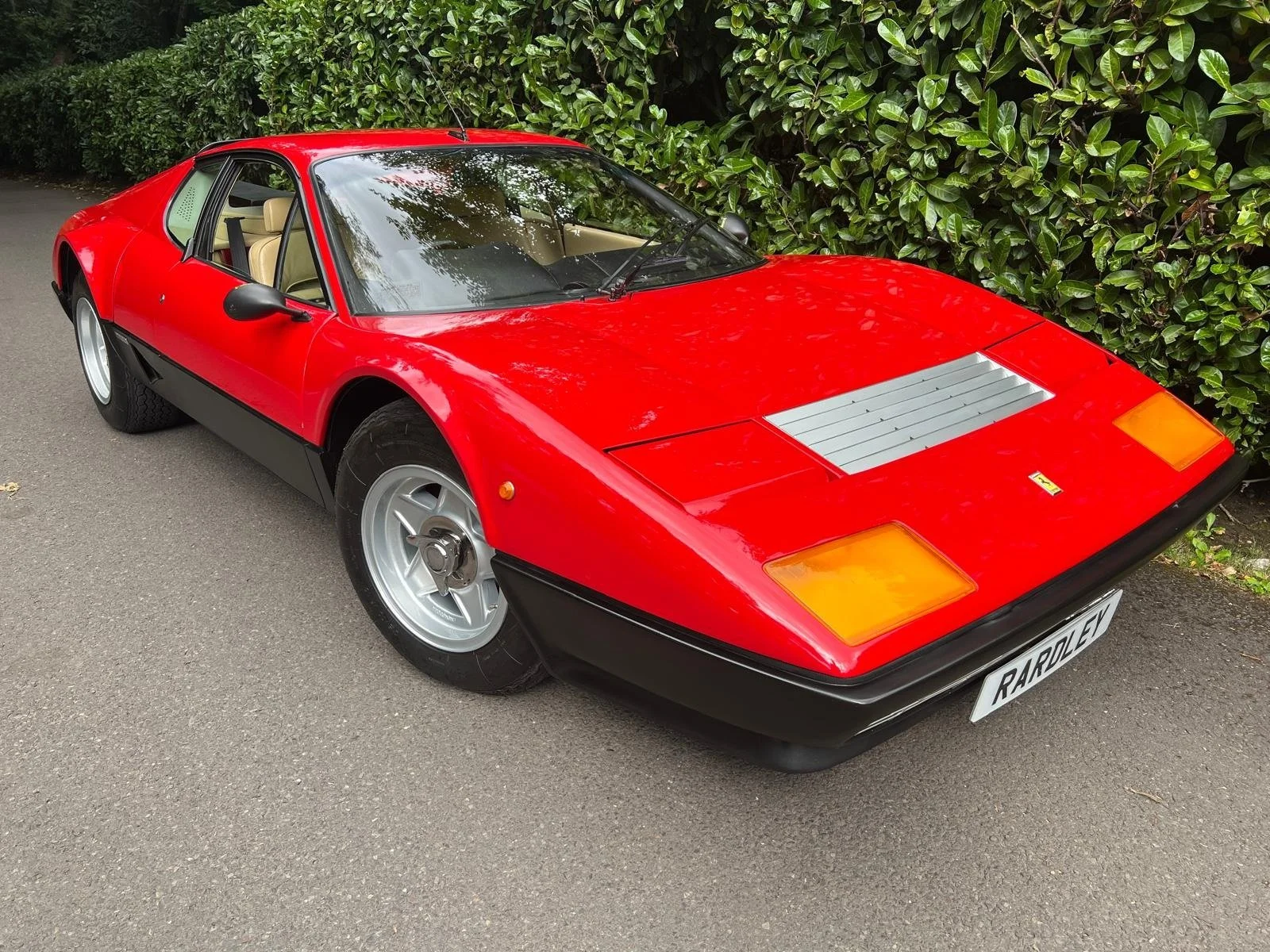
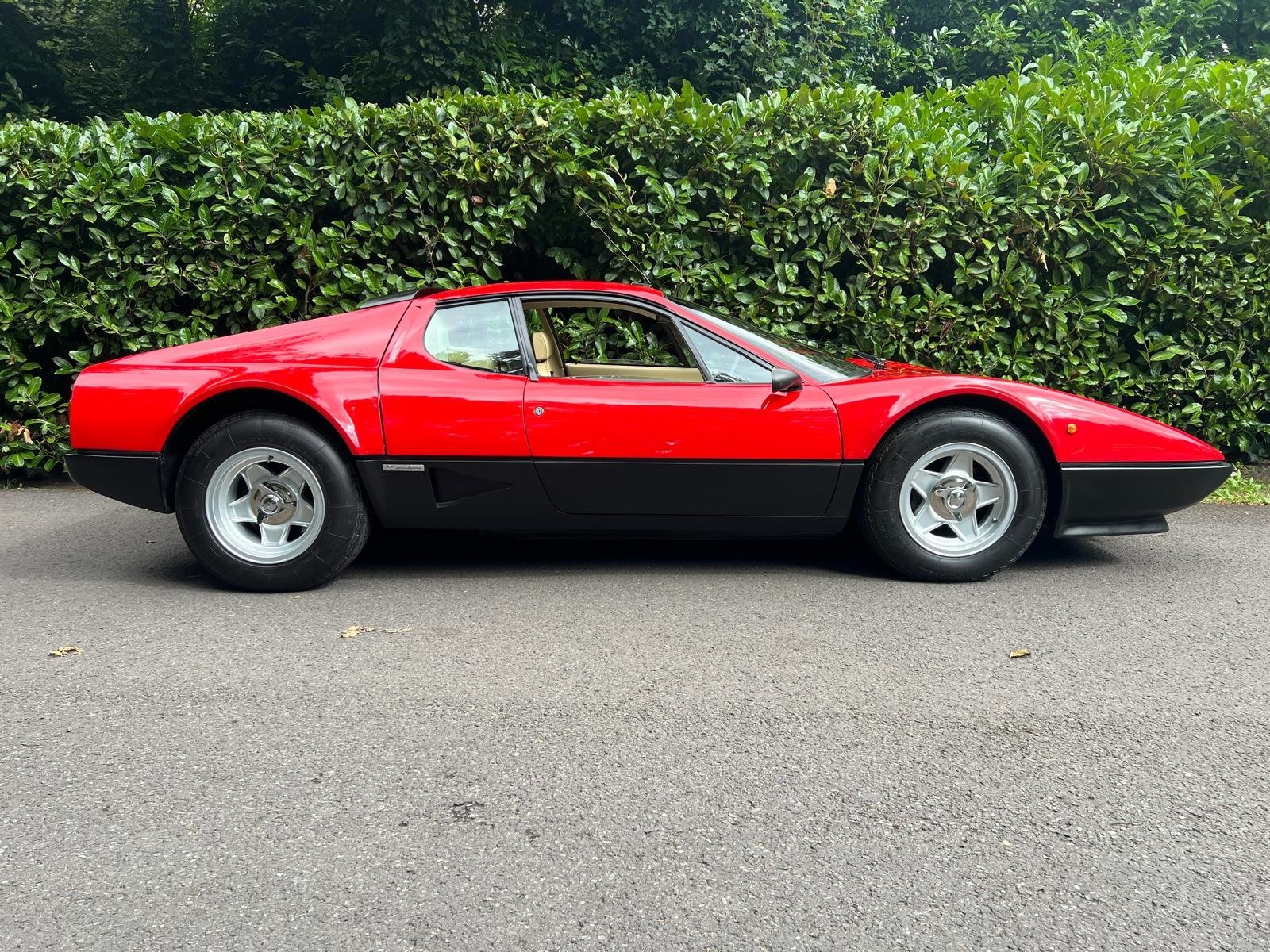
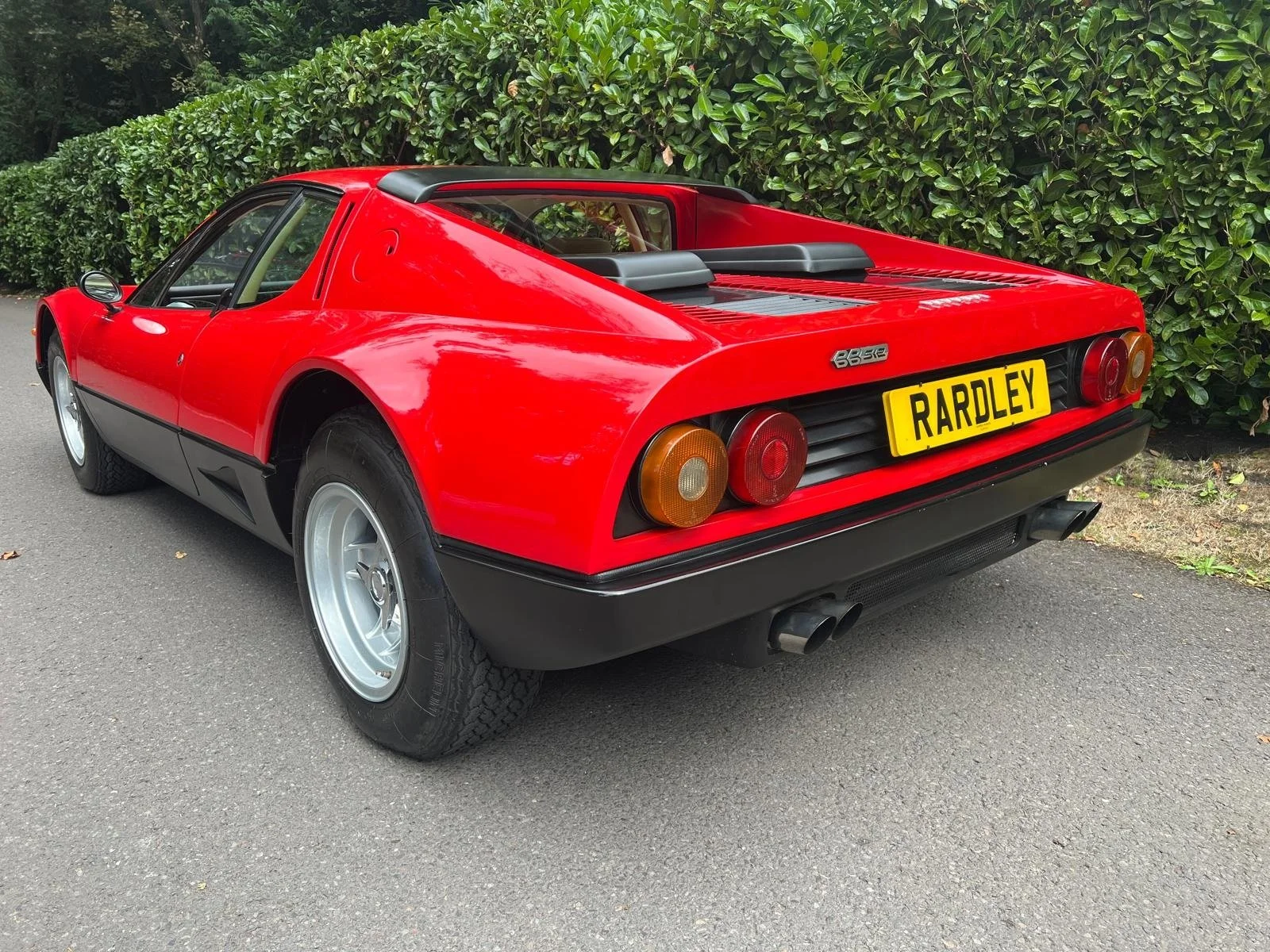
Ferrari 512 BB-One of 71
YEAR: 1977
MILEAGE: 58,000
EXTERIOR COLOUR: Red
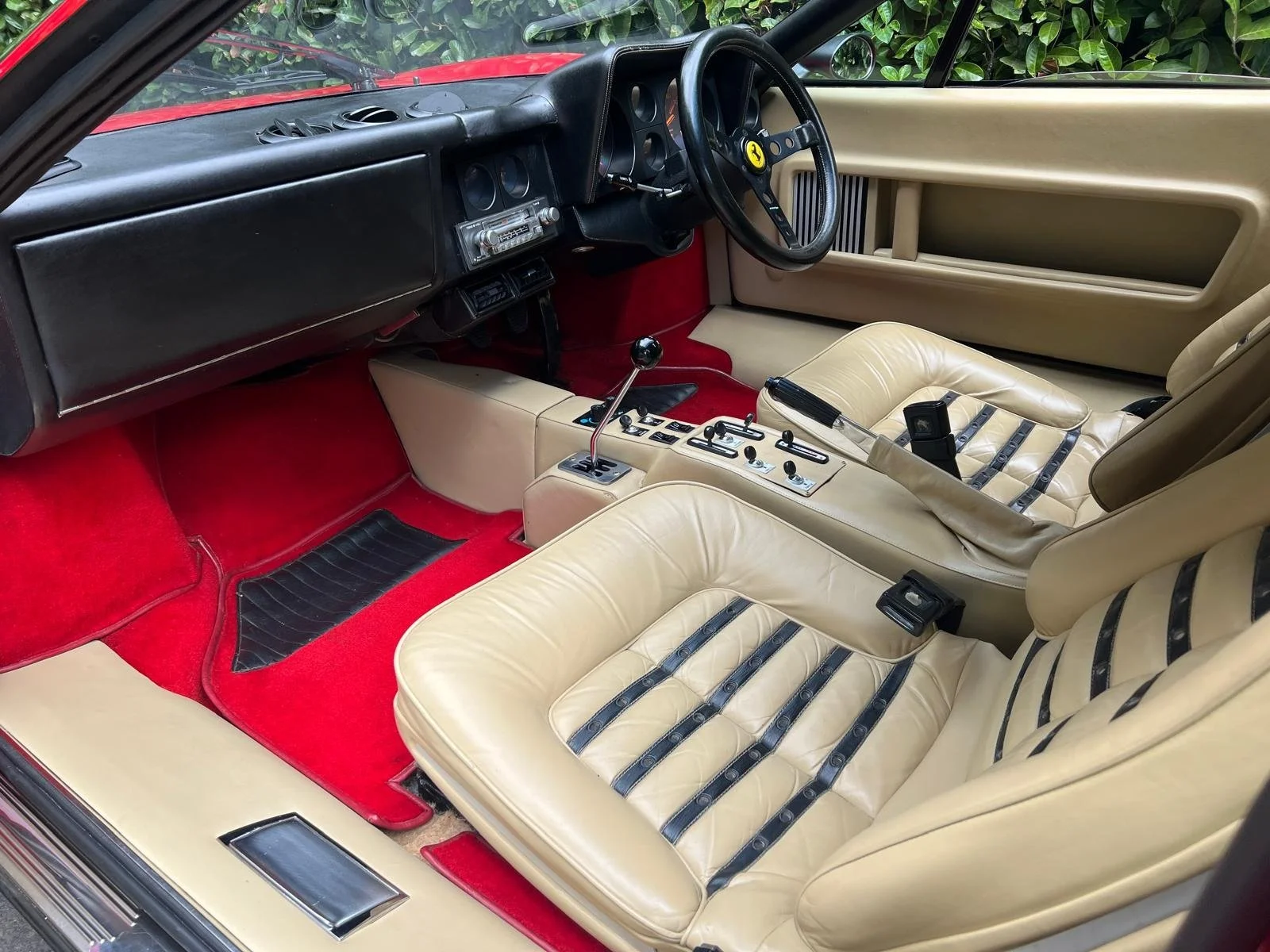
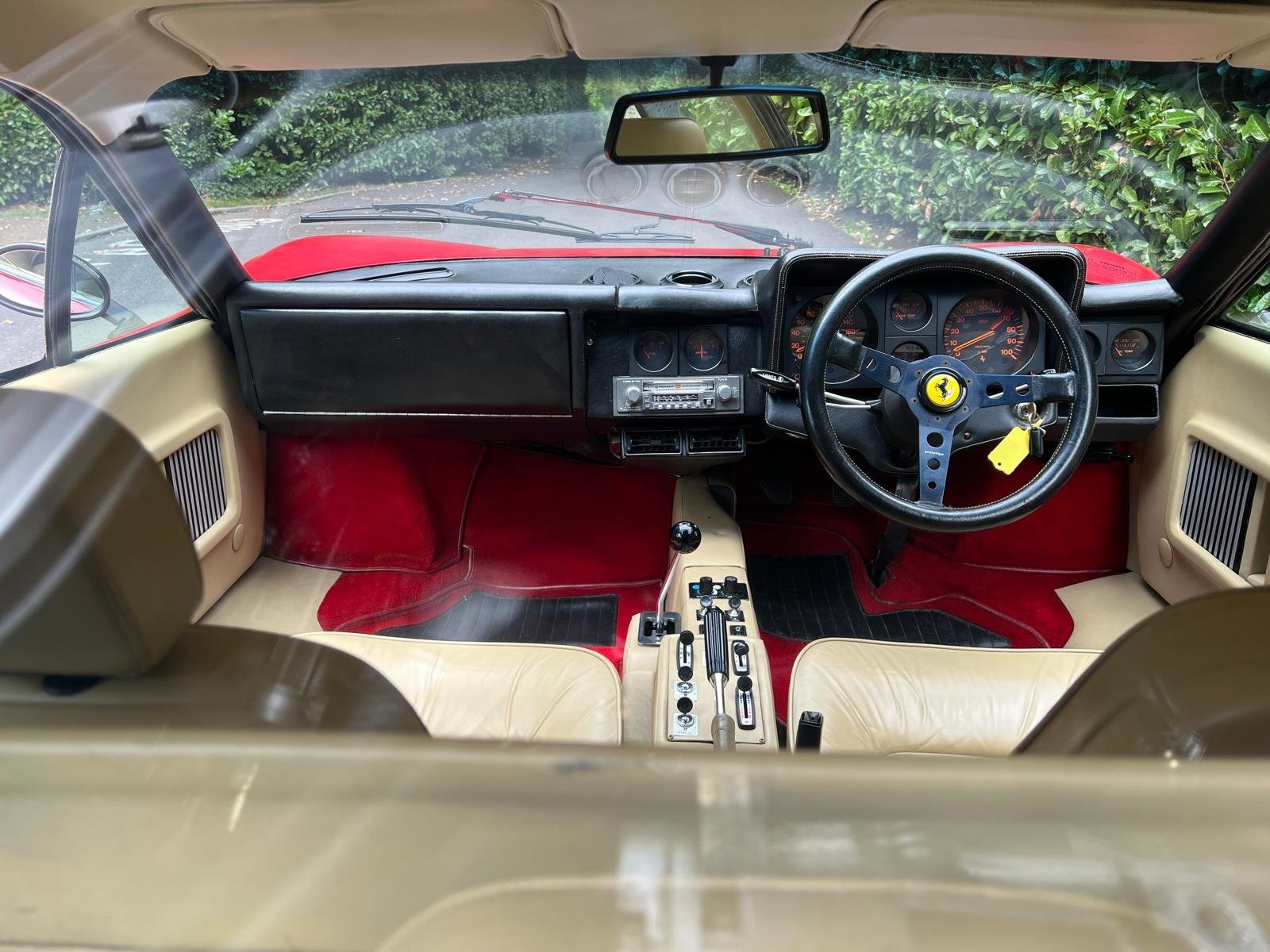
INTERIOR COLOUR: Sand (Sabbia) hide
TRANSMISSION: Five speed manual
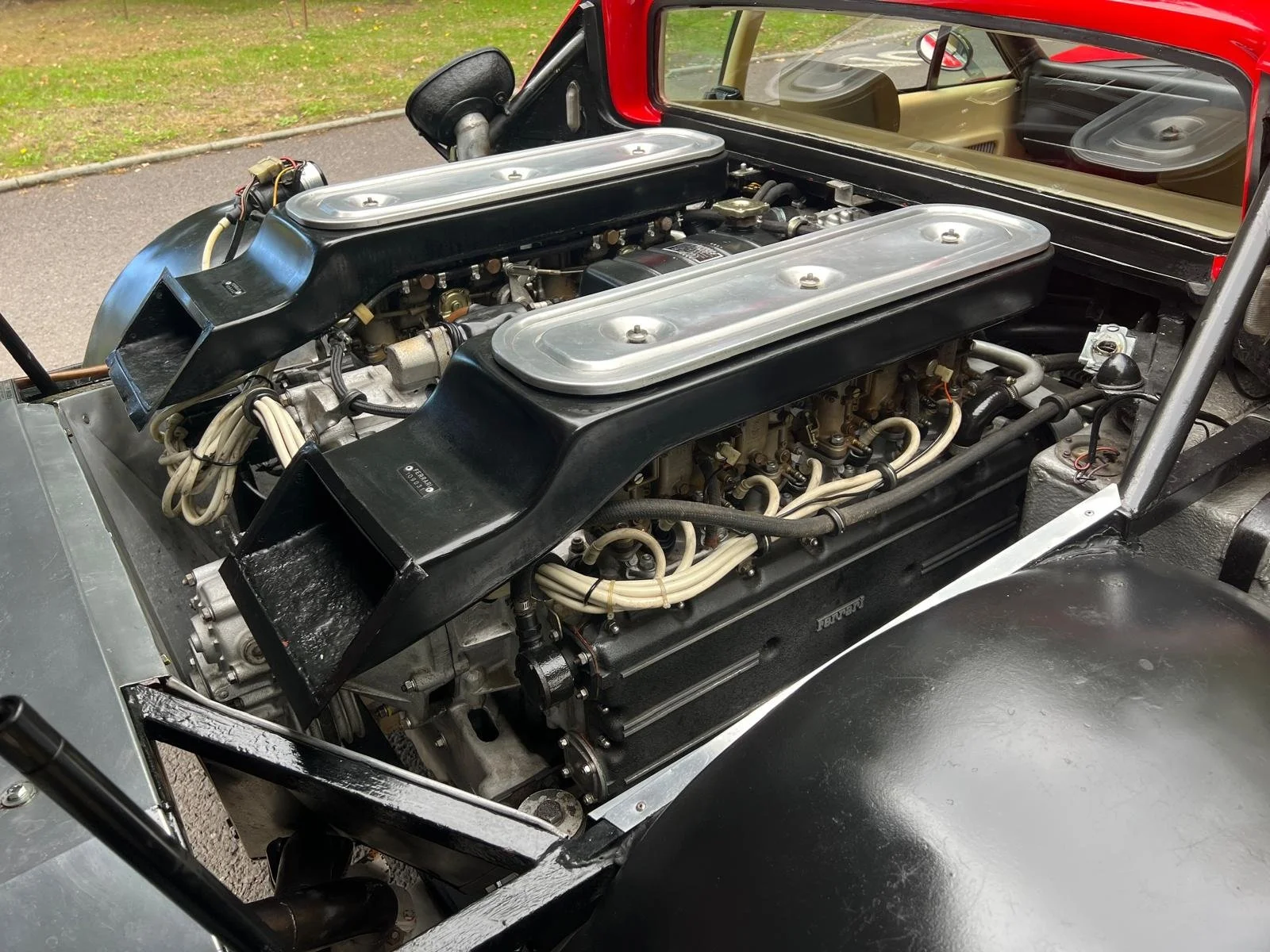
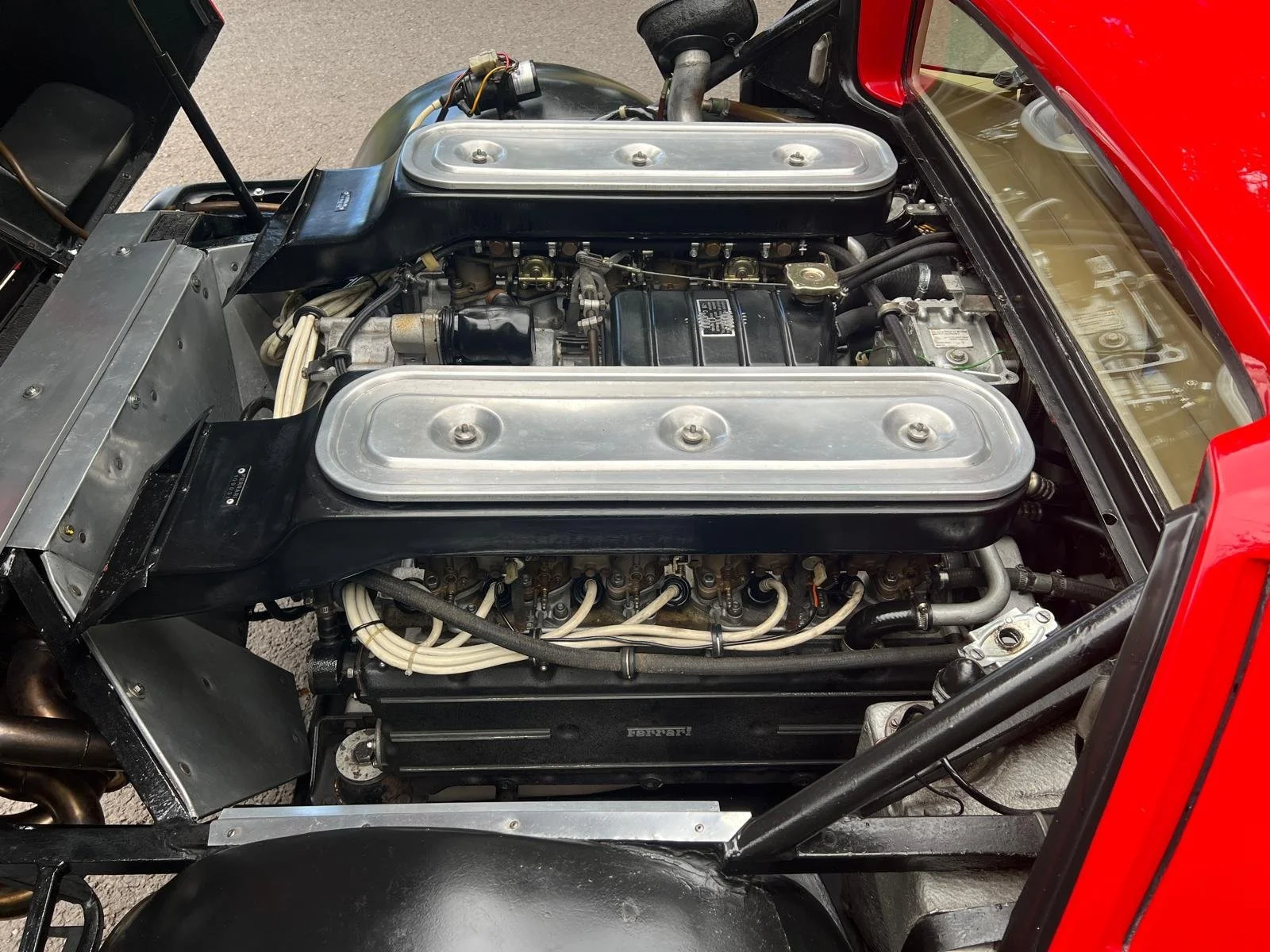
ENGINE: Flat 12. 4942cc
TOP SPEED: 188 mph
HORSEPOWER:360 bHP@4,800 rpm
£199,990
This matching number 512 was ordered by the Sales Director of Maranello Concessionaires Ltd on 4 July 1977 (Order No. 896). Specified in Nero (Salchi 20.B.619) with Sabbia hide (VM3234) and Corda carpets, it was scheduled for production in October 1977. The factory completed the car and invoiced Maranello Concessionaires on 3 October, after which it was transported by truck to the UK. The 26th -by chassis number- of 101 officially imported ,of which 71 remain taxed/SORN’d.
The car was first registered to an owner in Maidenhead, Berkshire, on 4 November 1977. Five days later, Maranello Concessionaires sold it to Maltin Car Concessionaires Ltd of Henley-on-Thames. As of 1 September 1977, its list price was £28,750.41, excluding delivery, number plates and road tax.
By March 1978, the car belonged to a 33-year-old Manchester businessman and long-standing Ferrari owner, who assigned his personal registration.
He retained the car for almost two years. In January 1980, it was purchased by an owner in Essex and re-registered onto his personal number. During his ownership, John Windsor of GTC Engineering in Northamptonshire fitted a new clutch, overhauled the brakes and exhaust manifolds, and carried out routine servicing. In July 1982, at a recorded 19,036 miles, Maranello Concessionaires rebuilt the gearbox for GTC Engineering at a cost of £2,296.09.
A London owner purchased the car in January 1983, when the odometer showed approximately 21,600 miles, and re-registered onto his personal number. Maintenance then passed to Modena Engineering Ltd of East Horsley, Surrey—my former company—where the car received a new clutch and its 22,000-mile service.
Later that year, another long-standing Ferrari owner in London purchased the car from David Clark who would later become Sales Director of McLaren’s F1 road-car project. Although the new owner lived in Chiswick, he registered the car at the vendor’s London address and assigned his personal registration. He recalled it as “exceptionally quick”—noticeably faster than his later 512 BB—and remembered an M3 journey during which the speedometer indicated 175 mph.
He also remembered the car as dark metallic blue, consistent with the HPI report. The car was later sold back to the previous vendor, who appears to have sold it to an owner in Norway on 4 December 1984, when it had covered approximately 31,400 miles. The former owner noted that his registration number was lost during the transfer.
While in Norway, the car was maintained by Ferrari Assistenza Les Routiers in Arlberg. In August 1988, Maranello Concessionaires repurchased it and re-imported it to the UK, recording its colour as red. Its workshops then undertook a comprehensive restoration.
The car was stripped of its mechanical and interior components, and the engine and transmission were fully serviced. The steering, suspension and braking systems were dismantled and overhauled as required. The body was stripped to bare metal, deteriorated panels were removed, and the chassis was mounted on an alignment jig to ensure conformity with Ferrari specifications. The rear chassis subframe was renewed, and the body was rebuilt using new or specially fabricated panels, with the seams finished in lead.
The body was then refinished in Rosso Corsa using Ferrari-recommended Glasurit two-pack, low-bake paint. The car was reassembled, retrimmed as required, geometrically aligned, road-tested and given a final tune.
Recorded as Job No. 1576, the restoration was invoiced on 31 October 1989 at 37,700 miles and cost £27,056.51, excluding VAT. On 23 May 1990, Maranello Sales Ltd sold the car to an owner in Leeds for £159,000, accepting a Ferrari 412 Automatic in part-exchange. The mileage was then 38,200. Ferrari dealer JCT 600 fitted a new speedometer head on 15 May 1991 at 38,828 miles-documented and photographed.
The tenth owner, also from Leeds, purchased the car on 9 September 1994. The MOT certificate issued that day recorded 454 miles on the replacement odometer.
The next owner, from Surrey, purchased the car on 8 March 2001 through my colleague at Talacrest, where we both worked. The recorded mileage was 47,050. Rardley Motors subsequently maintained the car and stored it for approximately 12 months while the owner’s house and new garage were being rebuilt.
Following an independent inspection by a former Maranello Concessionaires mechanic Vince Mezullo, the car was purchased through me on 17 November 2008 by an owner in South London. It had then covered a recorded 51,053 miles. (I had previously sold him a Ferrari 246 GTS.)
Over the remainder of 2008 and beginning of 2009,Vince rebuilt the cylinder heads, replacing the sodium-filled exhaust valves with solid stainless-steel items. He also replaced a broken differential unit, fitted a new clutch and renewed the cam belts. The cam covers were re-crackled black, and the engine’s silver-grey components were repainted.
Eight years later on 12 November 2016, a gentleman from East Sussex purchased the car from the respected Ferrari specialist, Ian Barkaway. The replacement odometer showed approximately 17,600 miles, equivalent to 56,500 miles in total.
The most recent owner, a businessman, subsequently purchased the car through Ian Barkaway but did not re-register it. Ian continued to store the car in a Air Chamber. It joined a 512BBi and two Testarossa’s in his portfolio.
Having sold the one of the Testarossa’s and the 512BBi for him during 2026-both cars that I had sold him previously-this 512BB was brought to us where it was checked over and a cam belts replacement service was carried out, followed by an dependant MOT test, not actually required, but an additional check for a potential buyer.
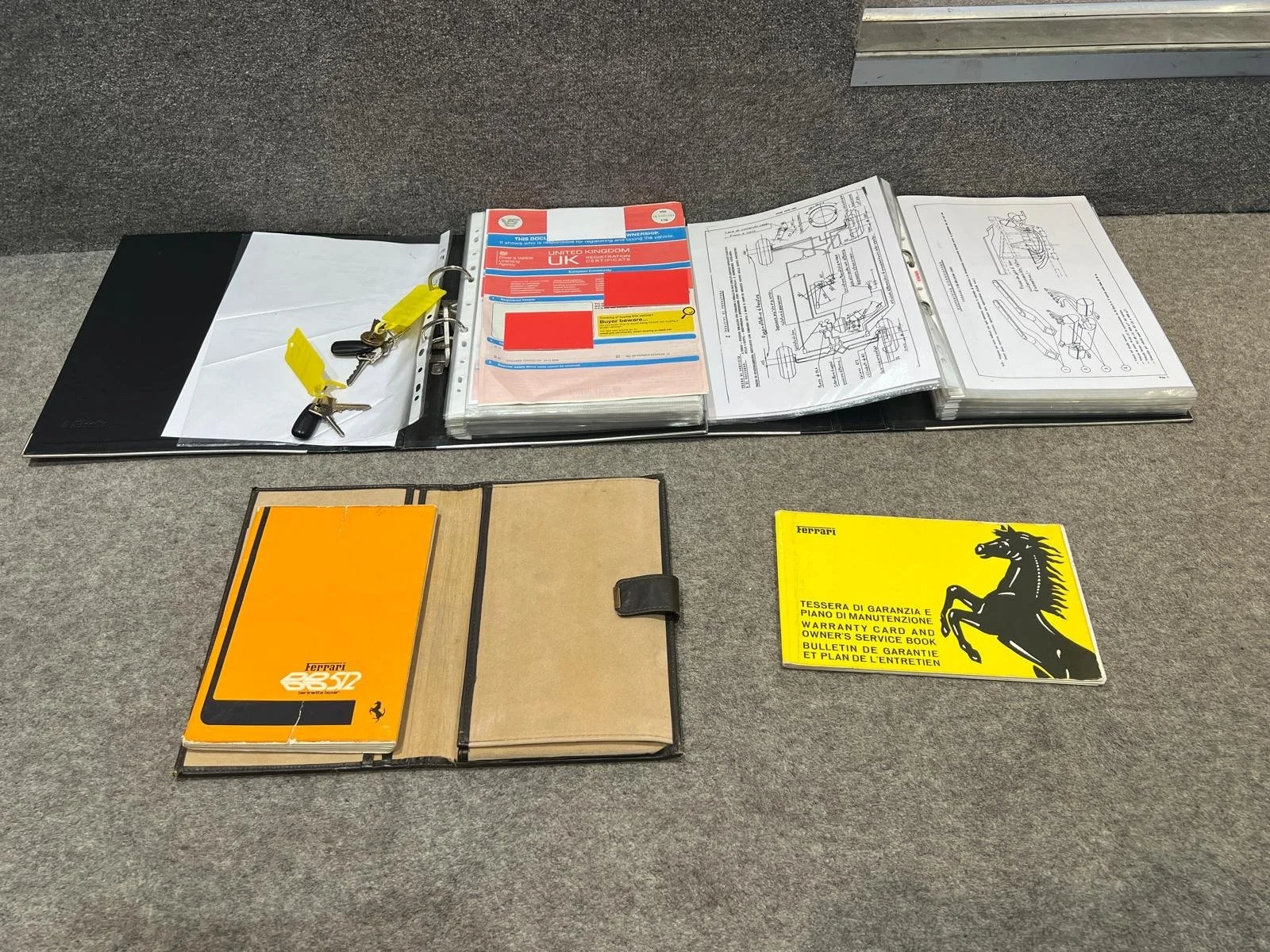
It is complete with its factory original service book, handbooks Ferrari cloth wallet and a vast file of past invoices and MOT’s as well as photographs of the work carried out for previous owners. The original Ferrari branded Pioneer radio cassette remains, whilst a stainless steel sports exhaust is also fitted.
History: Whilst the 365 Boxer was not seriously threatened by its rivals in terms of performance or market penetration, it was necessary to review its future in the face of ever more restrictive legislation concerned with pollution and noise. The feeling at Ferrari was that too much would be lost by trying to amend the 4.4-litre engine. A better solution would be to increase the engine capacity to 4942cc through increasing both the bore and stroke dimensions. The larger engine meant lower maximum revs with the inevitable loss of some power but a gain in torque - 331lbs/ft at 4300 rpm compared to 311lbs/ft at 4500 for the smaller engine.
With the 5-litre engine cam a change to dry sump lubrication to counteract any oil surge problems that might arise from the increased cornering power of the bigger car. The original 9.5in single plate clutch was replaced with an 8.5in twin plate and the final drive ratio was changed from 3.46:1 to 3.2:1 to offset the lower maximum revs and keep the speeds in the gears close to those of the earlier model.
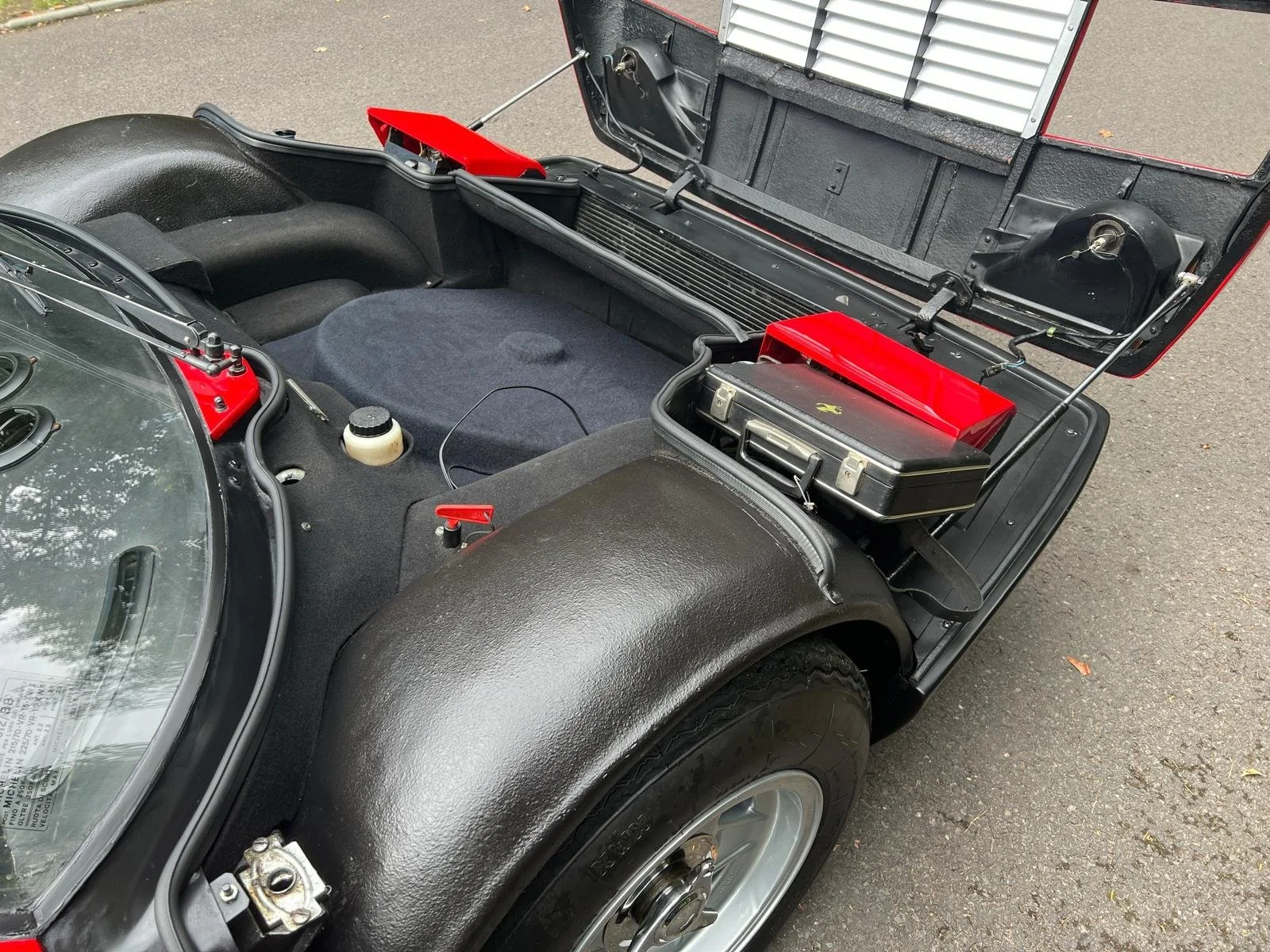
On the 365 version the tyre sizes front and rear had been the same. For the 512 Boxer those at the back were increased to 225/70VR15 on 9in. rims instead of 215/70VR15 on 7.5in rims.
At the front, the nose was lowered and redesigned to incorporate a spoiler to overcome the moderate amount of lift at high speed encountered on the 365 model. Another notable feature was the introduction of NASA ducts in the flanks to feed air to the rear brakes. At the back of the car the 6 round lights were reduced to 4. A modification to the exhaust system cut the number of tail pipes back from 6 (in 2 groups of 3) to 4 (in 2 groups of 2).
In contrast to the treatment accorded the 365 Boxer, more attention was paid to the preparation of competition versions.
For the 1978 running of the Le Mans 24-hour race 3 cars - 2 for the French concessionaire Charles Pozzi and 1 for Luigi Chinetti - were prepared with factory assistance. Their weight was reduced to about 2425lbs and with careful tuning and assembly, engine power was raised to some 460bhp. To cope with aerodynamic effects a larger spoiler was fitted; there was an aerodynamic duct on the front deck and a Formula 1-type front wing was fitted at the back. A fourth car was prepared at Garage Francorchamps for Jean Beurlys. It was to the same general specification but had its own aerodynamic arrangements.
By being faster through the curves than the Daytona’s of previous years, it set appreciably better times than those earlier cars. In the race it suffered from gearbox problems.
A second series of cars, more extensively prepared, was put in hand. The use of fuel injection brought the power up to around 480bhp at 7200rpm along with an even greater gain in torque. The transmission was strengthened and its lubrication improved by the use of an independent oil radiator. Brakes and suspension were worked on. The aerodynamics were improved through wind tunnel studies which gave a new front end and a long rear on which the wing was carried by 2 fins. The car's weight was down to around 2370lbs.
The 3 cars produced - 2 for Pozzi, 1 for NART - were entered for the Daytona 24 Hour Race of 1979 but serious tyre problems resulted in all of them retiring. At Le Mans later in the year, they were joined by a 4th car, that of Jean Beurlys, which was identical to the first 3. The 2 French entered cars were in peak condition but one, driven at the time by Michel Leclere, was in collision with a slower car shortly after 7am and the other, driven by Jean-Claude Andruet/Spartaco Dino, had got as high as third when it was forced into retirement around 9am with lubrication failure. Efforts have continued in the years since then but still without any notable success.
Whilst every effort is made to ensure the accuracy of the above details, we do not warrant that such details are accurate.
For further details or viewing please contact
Mike Wheeler
Copyright Mike Wheeler 2026
“This material is protected by the laws of copyright. The owner of the copyright is Mike Wheeler. These details form part of my database, and are protected by the database rights and copyright laws. No unauthorised copying or distribution without my written permission”